
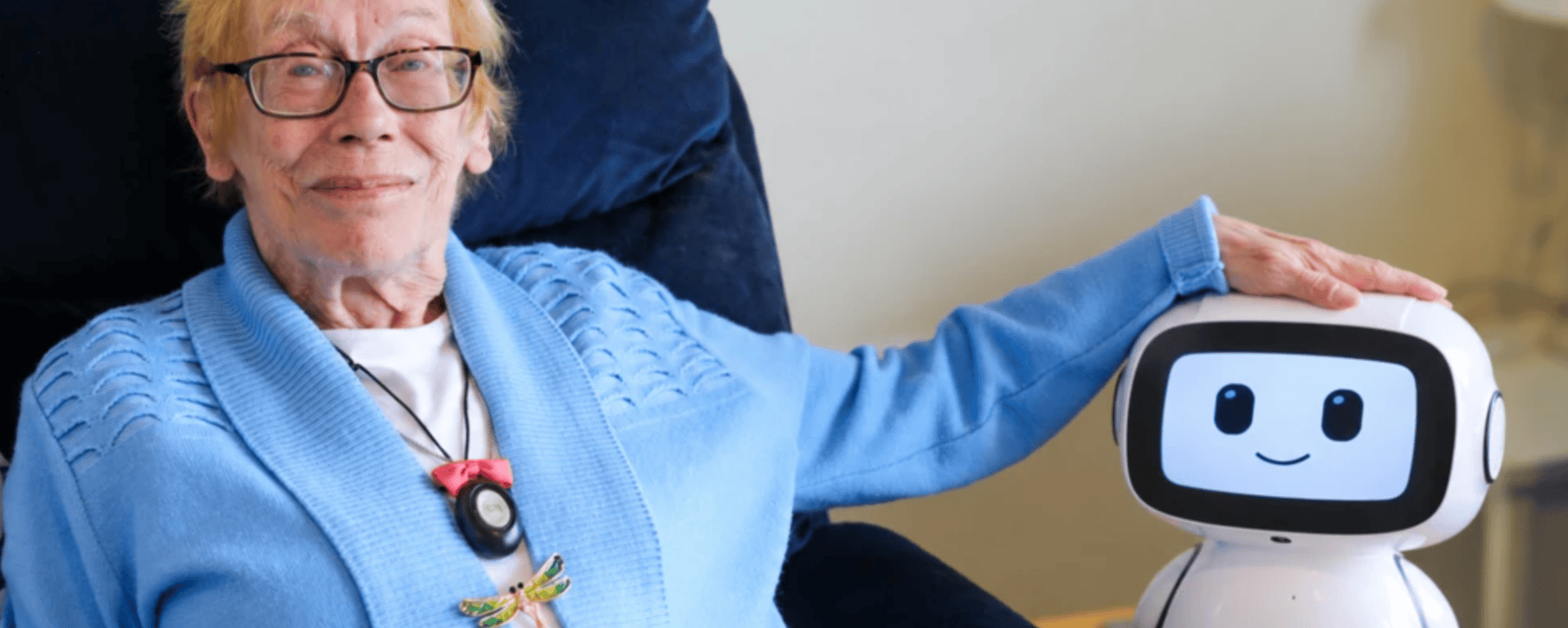
Cera says at least 1,000 people in England now use its companion robots, and it claims large gains in productivity. Behind the figures sits an older argument about whether technology frees carers to care or quietly replaces them, and the evidence is still thin.
Care Robots Are Reminding People to Take Medication But Who Is Checking the Results?
Companion robots are moving out of the pilot stage in English care. Cera, the home healthcare provider, says at least 1,000 people now use its devices, including residents of a retirement housing scheme in Lewisham. Each unit is loaded with an individual’s medical needs and daily routine, and prompts them towards medication, meals and activities. The numbers are small against the scale of UK domiciliary care. The direction is not.
With social care short of staff, commissioners squeezed and the government leaning on technology to carry reform, the question is no longer whether such devices reach care settings but who holds them to account when they do.
What The Devices Are Designed To Do
The pitch is operational rather than futuristic. A robot that knows a person’s medication times, appointments and routines can prompt them, and give staff a way to confirm that tablets were taken and fluids drunk between visits. Cera’s position is that the devices support its carers rather than replace them. For people living alone, there is a companionship argument too, with the device offering conversation and a route to family and friends.
That is plausible. It is also where the limits sit. Voice-driven conversation is prone to mishearing, and a scripted device cannot reliably tell a lapse in attention from low mood or early deterioration. Reminding someone to drink is a task. Noticing why they stopped is judgement.
Reading The Claims Behind The Numbers
Cera describes itself as Europe’s largest digital-first home healthcare provider, and it has put large figures on its impact. It has claimed that its AI tools reduce hospital admissions by up to 70 per cent, and says its robots raise care team capacity by 20 per cent and productivity by up to 80 per cent. These are company figures. No independent evaluation accompanies them in the material available, and the phrase “up to” carries a great deal of weight in each. The admissions claim also concerns Cera’s AI tools generally, not the robots specifically. A commissioner should ask for the methodology, the time period and the comparison group before agreeing to a demonstration.
Staffing Pressure And The Substitution Question
The sector’s real worry is less the robot in a resident’s flat than the spreadsheet that follows it. Support, not substitution, is the line suppliers and ministers share. It is also the line every workforce plan now has to defend.
In June, organisations representing more than a million NHS staff, including the Royal College of Nursing and the British Medical Association, asked Health Secretary James Murray to pause the NHS workforce plan, warning that its assumptions about AI ran ahead of the evidence and the safeguards. The Department of Health and Social Care replied that the tools are meant to support staff, not replace them. Social care providers, working under the wellbeing duty in the Care Act 2014 and tight commissioning budgets, will face the same fork. Whether a robot extends a carer’s reach or justifies shorter visits will depend less on the device than on how the contract is written.
What Providers And Commissioners Should Ask Before Buying
The questions are practical. What happens when the robot mishears or a resident does not respond, and who is alerted? What does it record, where does that data go, and does the resident understand? Around 80 per cent of CQC-registered providers now use a digital social care record, according to figures the Department of Health and Social Care announced in December 2025, so the test is whether a robot’s data feeds the care plan or sits apart from it.
Disclosure is the sharper risk. An Edinburgh study of ambient AI scribes, covered by IC News, found patients may say less about sensitive matters once they know AI is processing the conversation. A companion that a person living alone talks to daily raises the same question. Meanwhile, virtual ward models show remote monitoring works when mobile clinical staff stand behind it. An alert nobody has capacity to answer is a liability, not a safeguard.
Where Companion Robots Go From Here
Expect more of them, and more money behind them. The Treasury opened a £100m AI procurement competition in September, with NHS productivity first in the queue, aimed at suppliers that struggle to win contracts against established names. Funding of that kind rewards time-saving claims. The sector should insist that independent evaluation travels with it: setting-specific, peer-reviewed where possible, and measuring what residents experience rather than only throughput. The open questions are plain enough. Does loneliness ease? Do missed medications fall? Do staff gain time or lose it? And can a resident say no?
Robots can take on reminders and routine checks. Whether they leave carers with more time for the human side of care, or give commissioners a reason to buy less of it, the test providers will have to pass. Anyone buying should be able to show which one they got.

