
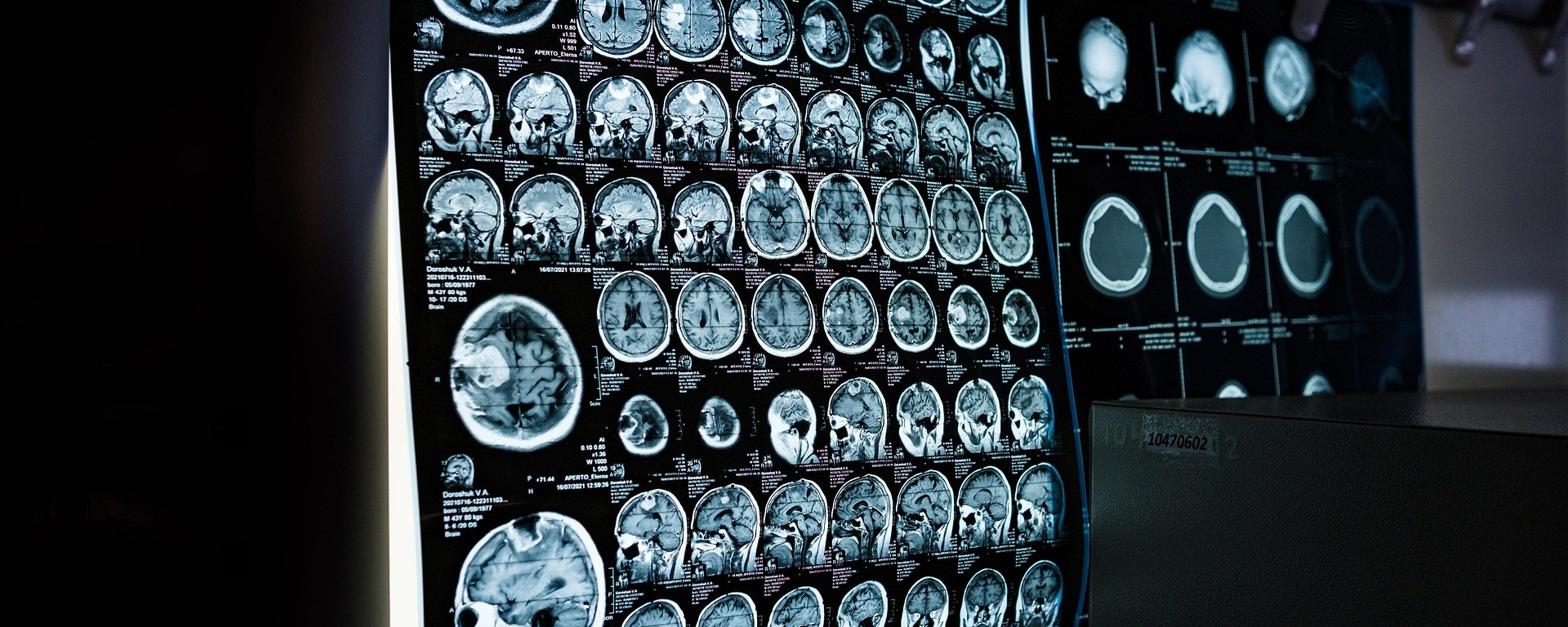
A portable, AI-assisted MRI scanner that can be wheeled to a patient’s bedside has cleared UK regulatory approval, opening the door to brain imaging in settings that have never had access to it. For a system chronically short of radiology capacity, that access question matters as much as the technology itself.
Hyperfine’s Next-Generation Swoop System Lands in Britain After UKCA
A scanner that fits through a standard doorway and produces a brain image without a dedicated imaging suite sounds like a solution built for a system with more time and money than the NHS currently has.
That is precisely the point. Hyperfine, the US health technology company behind the Swoop portable MRI system, has confirmed UKCA approval and CE marking for its next-generation Model 2 device, clearing the way for UK and wider European clinicians to use it.
For a health and care system where neuroimaging waiting times are frequently determined by scanner geography rather than clinical urgency, a device that moves to the patient rather than the other way round deserves scrutiny beyond the press release.
What The Next-Generation System Actually Does
The Swoop system is an ultra-low-field MRI scanner, meaning it operates at a fraction of the magnetic field strength of a conventional hospital MRI machine. That trade-off has always been the story with portable MRI lower field strength in exchange for portability, speed and the ability to scan a patient without moving them into a radiology department.
The Model 2 device is powered by an updated version of Hyperfine’s Optive AI software, which the company says materially improves image quality over the previous generation. Professor Steve Williams, Professor of Neuroimaging at King’s College London, described the improvement in image quality as transformative, adding that low-field MRI can now deliver what he called diagnostic-quality images. That is a notable claim from a named academic rather than a marketing line, and it is the kind of independent clinical voice IC News looks for before treating a vendor announcement as more than promotion.
Why Point-Of-Care Brain Imaging Matters For The UK
Access, not accuracy, has historically been the constraint on brain imaging in the UK. Stroke units, care homes, community neurology clinics and rural general practices do not have MRI suites, and patients in those settings often wait days for transfer to a facility that does.
A device that can be brought to a ward, a care home or a community diagnostic centre changes that equation, at least for the subset of clinical questions that ultra-low-field imaging can answer.
Hyperfine’s device is far from the only portable diagnostic technology attempting to solve access problems outside conventional hospital settings; a stroke rehabilitation wristband developed by an Imperial College London spinout is pursuing a similar logic, taking clinical monitoring out of the hospital and into the home. The direction of travel across UK health technology is consistent capability is moving toward the patient, not the other way round.
The Regulatory Route Into Britain
UKCA marking, the UK’s post-Brexit equivalent to the CE mark, is the mechanism through which Hyperfine has cleared this device for the UK market, alongside separate CE approval for the wider European launch. That dual-track approval process has become a familiar friction point for medical technology companies trying to serve UK and EU markets simultaneously, and it sits alongside a broader regulatory conversation the MHRA has been having about how AI-enabled diagnostic tools should be assessed. The regulator’s recent decision to open an AI sandbox for testing how artificial intelligence performs in safety-critical roles reflects a system trying to build oversight capacity for exactly this category of device, one where software, not just hardware, determines diagnostic output.
What This Means For NHS Trusts And Community Providers
For an NHS trust or integrated care board weighing whether to invest, the pitch is speed and reach rather than replacing conventional MRI outright. Hyperfine’s own account of the US rollout, where it says adoption has accelerated since the equivalent upgrade, will need independent scrutiny before UK commissioners treat it as evidence rather than assertion. The company has also secured a listing on UniHA, the French public hospital procurement framework, which will matter more to French trusts than British ones but signals the scale of ambition behind the European push. Any AI-assisted diagnostic tool entering regulated care in Britain will also need to satisfy the governance expectations the CQC has been steadily clarifying for AI-enabled care technology, where human oversight and demonstrable accountability remain non-negotiable regardless of how impressive the underlying software becomes.
The open question is not whether portable, AI-assisted MRI works. Independent clinical commentary suggests it does, within its limitations. The open question is procurement in which NHS trusts, community diagnostic centres or private providers will commit budget to a device that complements rather than replaces existing imaging infrastructure, at a time when capital spending across the NHS estate is under sustained pressure. Hyperfine says it intends to have Model 2 available through distribution partners across all its European markets by the end of the year. Whether British commissioners move at the same pace as the company’s ambition is a separate question entirely.
Portable diagnostic imaging is no longer a novelty pitch. It is becoming a recognisable category, and the UK’s willingness to fund it at scale will say as much about NHS priorities as it does about the technology itself.

