
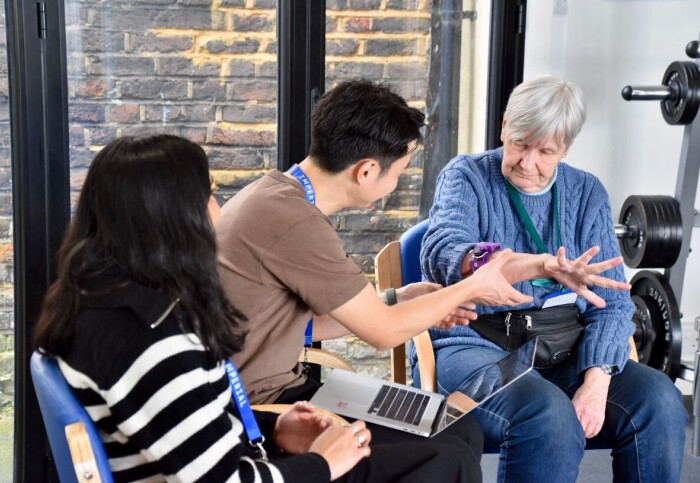
A spinout from Imperial College London has closed a £1.5 million seed round to bring a wearable stroke rehabilitation device into home settings, with MHRA certification and a clinical study at Charing Cross Hospital next on the agenda.
Neubond Secures Seed Funding To Challenge NHS Stroke Therapy Gap With At-Home Wearable
Every year, around 100,000 people in the UK have a stroke. Many survive. Many are then left to rebuild their lives with a system that was not designed to hold them.
The NHS provides intensive support in the acute phase, but once patients are discharged into the community, the continuity of care frequently breaks down. NICE (National Institute for Health and Care Excellence) guidelines call for at least three hours of therapy a day, five days a week, during stroke rehabilitation, a standard that NHS community services routinely fall short of, not through indifference, but through structural constraint.
Into that gap, a small team from Imperial College London has been working on something rather specific: a wristband that listens to your muscles, and tells your brain you moved.
Neubond, a spinout from Imperial’s Department of Bioengineering, has raised £1.5 million in seed funding to accelerate its at-home stroke rehabilitation device towards regulatory approval and clinical deployment. The round was led by Waseda University Ventures, a deeptech fund backed by one of Japan’s leading private research universities, marking its first investment in a UK company. SFC Capital and New Wave Ventures also participated.
What The Neubond Device Actually Does
The science underpinning Neubond’s device is grounded in neuroplasticity, the brain’s capacity to rewire itself in response to repeated experience. After a stroke, the connection between a patient’s intention to move and their ability to execute that movement is disrupted. Patients may attempt to flex a wrist or extend an arm, generating a faint electrical signal in the muscle, without producing any visible or sensory result. That absence of feedback is part of what stalls recovery.
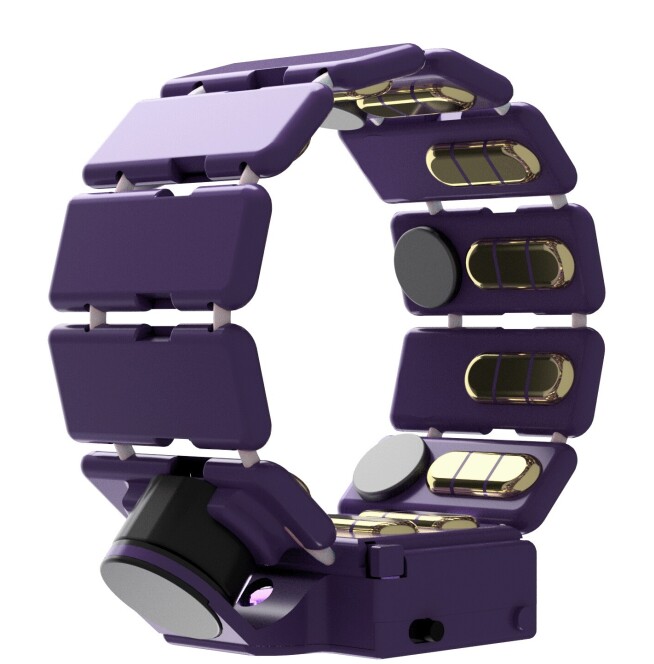
Neubond’s bracelet, worn on the forearm, uses a high-density grid of miniaturised sensors to detect those faint electrical signals even when the patient cannot see or feel any movement. When it registers a signal, a companion app shows the patient in real time that their muscle has activated. The feedback loop attempt, detection, confirmation is designed to reinforce the neural pathway connecting intention to physical response. The core science was developed over more than a decade in the laboratory of Professor Dario Farina, head of Imperial’s Neuromechanics and Rehabilitation Technology lab and a co-founder of the company.
In a pilot study involving 15 patients, users recorded a 30% improvement in range of motion after one month of use. Participants also showed improvements in coordination and muscle amplitude in targeted areas, with some reporting gains in everyday activities handwriting, self-hygiene, and opening doors that had been lost since their stroke.
Closing The NHS Gap In Community Stroke Care
Neubond’s platform enables clinicians to design rehabilitation programmes remotely and track patient progress without requiring in-person visits monitoring repetitions, muscle contraction quality, and activity levels through data synchronised via the app. For a community physiotherapy service managing a caseload under considerable pressure, that kind of remote monitoring capability has obvious implications for how outpatient stroke rehabilitation could be structured.
Regulatory Strategy And The Road To Market
Neubond is pursuing MHRA certification in the UK, with the seed funding earmarked for product finalisation, regulatory submissions, and a clinical feasibility study at Charing Cross Hospital. That study will inform the design of a future randomised controlled trial, the threshold the company will need to clear before making formal clinical claims about therapeutic effect.
The founders are pursuing a phased regulatory approach. The first version of the device to reach the market will function as a monitoring tool tracking movement intention and helping patients visualise muscle activity which requires a less demanding regulatory pathway than a device making therapeutic claims. It is a pragmatic decision: it gets the technology into clinical settings sooner, builds the evidence base, and manages the risk profile that seed-stage investors understandably scrutinise. The full neurostimulation capability, which delivers precise electrical stimulation to reinforce the nervous signal in real time, will follow once the clinical trial data supports it.
A Growing Market, And A Competitive One
The global neurorehabilitation devices market was valued at approximately $2 billion in 2023, with projections suggesting it could approach $5 billion by 2030. Wearable devices are the fastest-growing segment within that field, and competition is intensifying. In the United States, Kandu Health and Neurolutions merged in April 2025 to create Kandu Inc., combining a brain-computer interface that has already received FDA clearance with telehealth infrastructure, backed by $30 million in funding. Kandu is focused squarely on the US market. Neubond, by contrast, is building for the NHS seeking MHRA approval and designing its clinical and commercial strategy around the priorities of UK health commissioners.
Whether that focus proves to be an advantage or a constraint will depend heavily on how quickly the MHRA process moves, and how receptive integrated care boards are to funding community rehabilitation technology at a moment when adult social care budgets remain acutely stretched.


One thought on “Imperial Spinout Raises £1.5M To Bring Stroke Rehabilitation Wristband Into NHS Homes”