

Over one million children in England were referred to mental health services in the year to March 2025, almost double the figure from six years ago. With suspected autism referrals rising 47% in a single year, the children’s commissioner is demanding SEND reform.
One Million Children Referred and a SEND System With No Answer to the Scale of It
The number of children referred to children and young people’s mental health services in England has passed one million for the first time. Analysis of NHS data published Monday by Children’s Commissioner Dame Rachel de Souza puts the figure at 1,048,965 active referrals in the twelve months to March 2025, nearly double the 563,639 recorded in 2018-19.
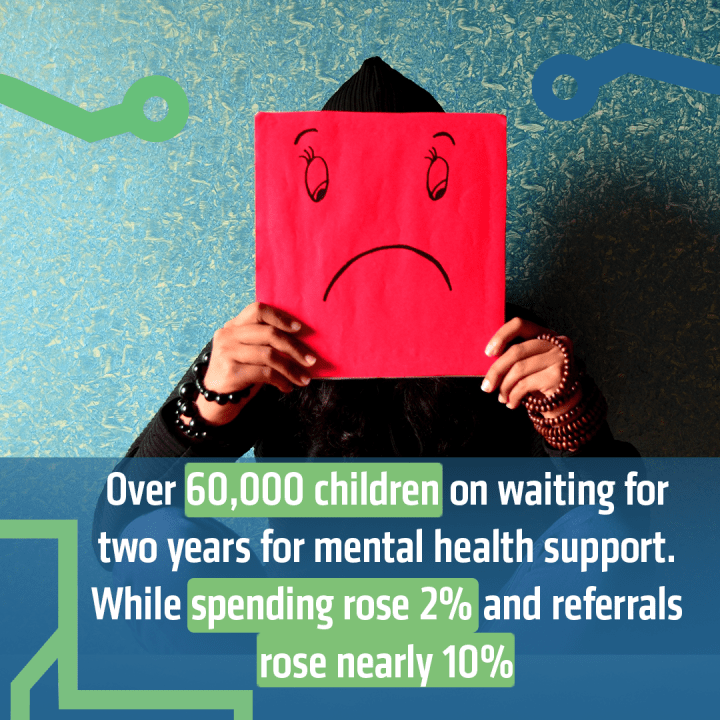
Dame Rachel did not hedge. She said she was “in no doubt that we are facing a crisis.” Over a third of those children were still waiting for treatment at the time of reporting. More than 60,000 had been waiting longer than two years. The typical wait was 128 days. Real-terms spending on children’s mental health services rose by two per cent in 2024-25. Referrals rose by nearly ten. That gap is not closing.
The Autism Surge Is a SEND System Problem in Disguise
The 47% annual rise in referrals for suspected autism is the figure that should stop people in their tracks. It does not describe a sudden epidemic. It describes a system finally catching up with demand it has been suppressing for years, and doing so unevenly and at considerable cost to children who waited far too long for an explanation of why the world felt the way it did.
Fewer than one in five children referred with suspected autism or a neurodevelopmental condition went on to receive treatment in 2024-25. Those who did waited an average of a year. This is not, at its root, a children’s mental health problem. It is a SEND system problem that presents in mental health services because there is nowhere else for these children to go. Dame Rachel’s recommendation to reform the special educational needs and disabilities framework in England reflects that reality, the pathway is broken well before it reaches a mental health clinician.
A System That Was Never Designed to Connect
The commissioner’s call for joined-up services across health, education, and social care is the right diagnosis. The harder question is why, after years of integrated care rhetoric, the data infrastructure to support it still barely exists.
A child being assessed for autism in a community paediatric clinic, a school completing an Education, Health and Care plan, and a local authority social care team conducting a family assessment are routinely working from entirely separate records with no shared view of that child’s history. A similar kind of fragmentation has happened before in the adult dementia care settings, where the dementia training gap revealed a workforce operating without adequate preparation partly because compliance systems measure box-ticking rather than outcomes. The SEND system has the same failure mode, data is recorded, assessments are completed, and children fall through the gaps between agencies that cannot see each other.
The inequalities the commissioner highlights make this worse. One in four black children directed to children’s mental health services was referred in crisis, against 7.4% of white children. Children from the most deprived tenth of areas in England made up 15% of referrals. The system is not just slow. It is unevenly slow, in ways that closely track existing disadvantages.
What the Technology Sector Should Actually Be Building
There is genuine risk that this becomes a story about AI diagnostics and algorithmic screening tools, because those are easier to pitch and easier to fund. The more urgent need is less exciting, shared records, interoperable data standards, and digital infrastructure that allows a GP, a SENCO, a community health nurse, and a local authority social worker to work from the same picture of the same child.
The NHS Long Term Plan committed to integrated digital records across health and social care. Progress has been slow and patchy. Recent investment signals, including the £11 million Greater Manchester wearables cluster and the £85 million obesity care programme, show what is possible when commissioning intent and funding align around community-based care. Children’s mental health and SEND need the same kind of systemic ambition, not point solutions bolted onto a broken pathway.
The children’s commissioner has put the case for reform clearly. Whether technology plays any meaningful role in the response will depend on whether local authorities and integrated care boards are willing to commission infrastructure rather than just products. Sixty thousand children have been waiting for more than two years. The problem was never a shortage of digital tools. It was a shortage of will to connect them.


One thought on “Children’s Commissioner Calls for SEND Reform as Mental Health Waiting Lists Keep Growing”