New analysis reveals stark regional disparities in access to robotic-assisted surgery across England, raising concerns about equity, funding, and digital health strategy.
NHS Robotic Surgery Ambitions Collide With Uneven Reality
A major expansion of robotic-assisted surgery across England is underway, positioned as a cornerstone of the NHS’s long-term digital health transformation. Yet new evidence suggests that access to this advanced care technology is far from equal, with patients’ treatment options increasingly shaped by geography rather than clinical need.
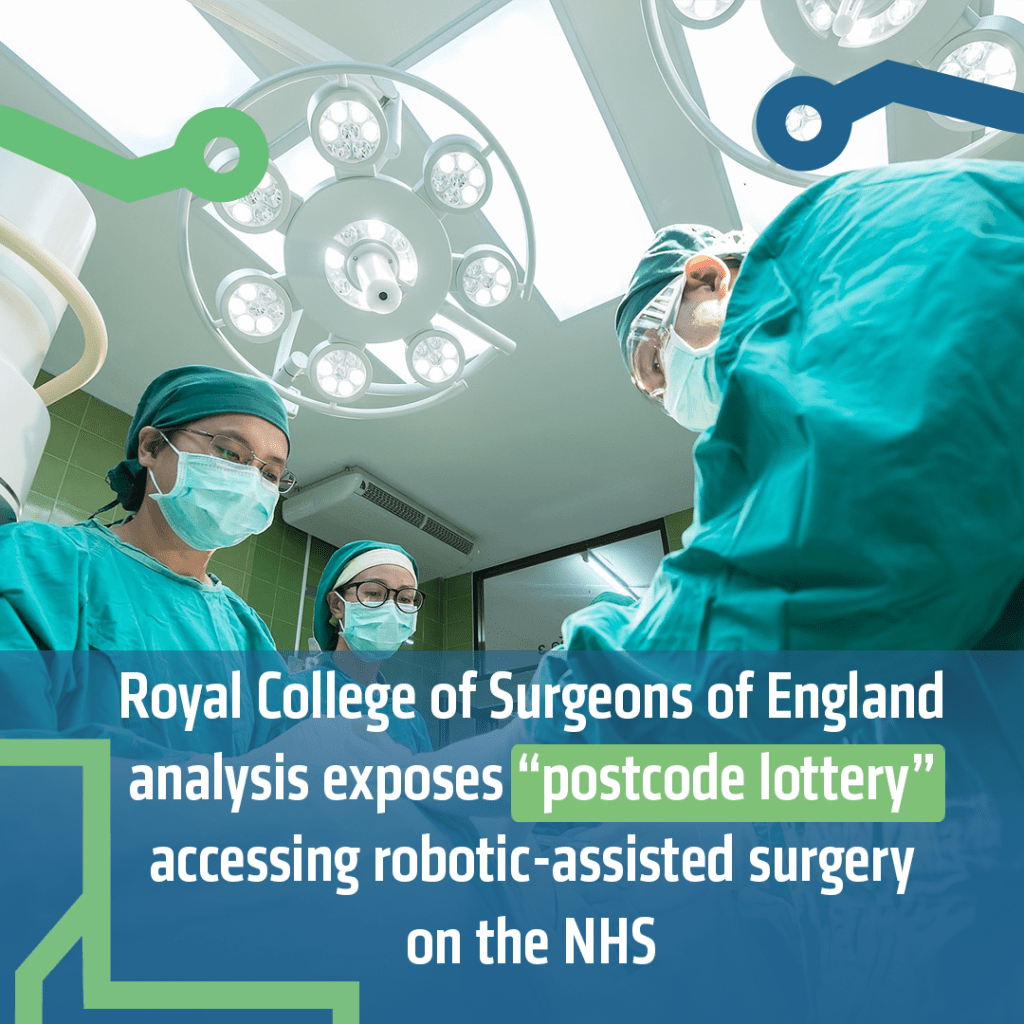
Analysis published by the Royal College of Surgeons of England (RCS England) on 20 April exposes significant regional disparities in the availability and use of surgical robots. Despite national ambitions to scale up adoption, the findings point to a fragmented and inconsistent rollout, raising critical questions about how innovation is delivered across the UK care sector.
The issue is particularly acute at a time when digital health and care technology are being championed as key tools to improve outcomes, reduce waiting lists, and shift care closer to home. For community health services and home care providers, the implications extend beyond hospitals, influencing recovery pathways, rehabilitation demand, and patient flow across the wider system.
Regional Disparities Highlight A Growing “Postcode Lottery”
The RCS England analysis provides the first national snapshot of robotic surgery provision across NHS trusts, based on Freedom of Information data. It reveals stark regional imbalances in access to surgical robots.
London-based trusts collectively operate 28 robotic systems, while the South West has just six and the East of England 15. Some trusts have invested heavily in multiple platforms, while others have none at all.
This uneven distribution is not simply a matter of infrastructure. It directly affects patient access to minimally invasive procedures that can lead to shorter hospital stays, faster recovery, and fewer complications. For patients requiring follow-up support in community settings or home care environments, these differences can significantly alter recovery trajectories and care needs.
In practice, this means that two patients with similar clinical conditions may experience entirely different care pathways depending on where they live. For a health system committed to equity, this represents a growing challenge.
Fragmented Funding Models Complicate Digital Health Adoption
Alongside geographic disparities, the report highlights a lack of consistency in how robotic systems are funded. NHS trusts are currently relying on a patchwork of financial approaches, including capital investment, leasing arrangements, managed service contracts, and cost-per-case models.
In some instances, charitable fundraising has played a decisive role. One trust reported spending more than £2 million raised through donations to acquire a robotic platform, underscoring how access to advanced care technology can depend on local fundraising capacity rather than national planning.
This fragmented approach reflects broader challenges in scaling digital health and care technology across the NHS. While innovation is often encouraged at a local level, the absence of coordinated funding frameworks can lead to inefficiencies, duplication, and inequity.
For integrated care systems (ICSs) and local authorities, this creates additional complexity when planning services across acute, community, and social care settings. Without clarity on where robotic capabilities exist, it becomes harder to design joined-up care pathways that optimise patient outcomes and resource use.
Data Gaps Hinder Strategic Planning Across The Care System
A further concern raised by RCS England is the absence of a comprehensive national dataset on robotic surgery provision. Currently, there is no single, transparent source of information detailing where robotic systems are located, how they are used, or what outcomes they deliver.
This lack of visibility poses challenges for NHS England, the Department of Health and Social Care, and integrated care boards attempting to plan services strategically. It also limits the ability to assess value for money, particularly as the NHS seeks to scale up to 500,000 robotic-assisted procedures annually by 2035.
From a community health technology perspective, these data gaps have downstream consequences. Without robust insights into surgical capacity and outcomes, it becomes more difficult to anticipate demand for post-operative care in the community, including rehabilitation services, remote monitoring, and home-based support.
Digital health strategies increasingly rely on data integration across care settings. The absence of standardised data on robotic surgery risks creating blind spots in system-wide planning.
Linking Surgical Innovation To Home And Community Care
Robotic-assisted surgery is often discussed in the context of hospital-based innovation, but its impact extends well beyond the operating theatre.
Minimally invasive procedures enabled by robotic systems can reduce hospital length of stay, meaning patients return home more quickly. This shift places greater emphasis on home care technology, community health services, and social care innovation to support recovery.
For care providers, this creates both opportunities and challenges. On one hand, shorter hospital stays can improve patient experience and reduce pressure on acute services. On the other, it requires robust digital infrastructure to support patients at home, including remote monitoring tools, digital care planning platforms, and coordinated multidisciplinary teams.
Without equitable access to robotic surgery, these benefits are unevenly distributed. Regions with limited access may continue to rely on more invasive procedures, leading to longer hospital stays and increased demand on already stretched community services.
Industry And Policy Perspectives On Scaling Care Technology
The government has identified robotics as one of five “big bets” in its 10 Year Health Plan for England, with a vision that advanced technologies will deliver care with “unprecedented precision”. However, the RCS England findings suggest that ambition is currently outpacing implementation.
Professional bodies have emphasised that scaling robotic surgery requires more than just purchasing equipment. It involves investment in workforce training, infrastructure, maintenance, and governance frameworks to ensure patient safety.
There is also a growing recognition of the role industry must play in supporting adoption. More flexible financial models, including refurbished systems and service-based contracts, could help lower barriers for trusts with limited capital budgets.
From a care technology standpoint, interoperability is another critical factor. Surgical robotics must integrate with wider digital health ecosystems, including electronic patient records, imaging systems, and community care platforms. Without this integration, the full benefits of digital transformation cannot be realised.
While the technology promises improved outcomes and greater efficiency, its uneven distribution risks reinforcing existing inequalities within the UK care sector. Addressing these challenges will require coordinated action across funding, data, workforce, and infrastructure.
For care providers, local authorities, and technology suppliers, the message is clear: innovation must be matched by strategic planning and equitable access. Only then can the benefits of digital health and care technology be realised across hospitals, homes, and communities alike.