
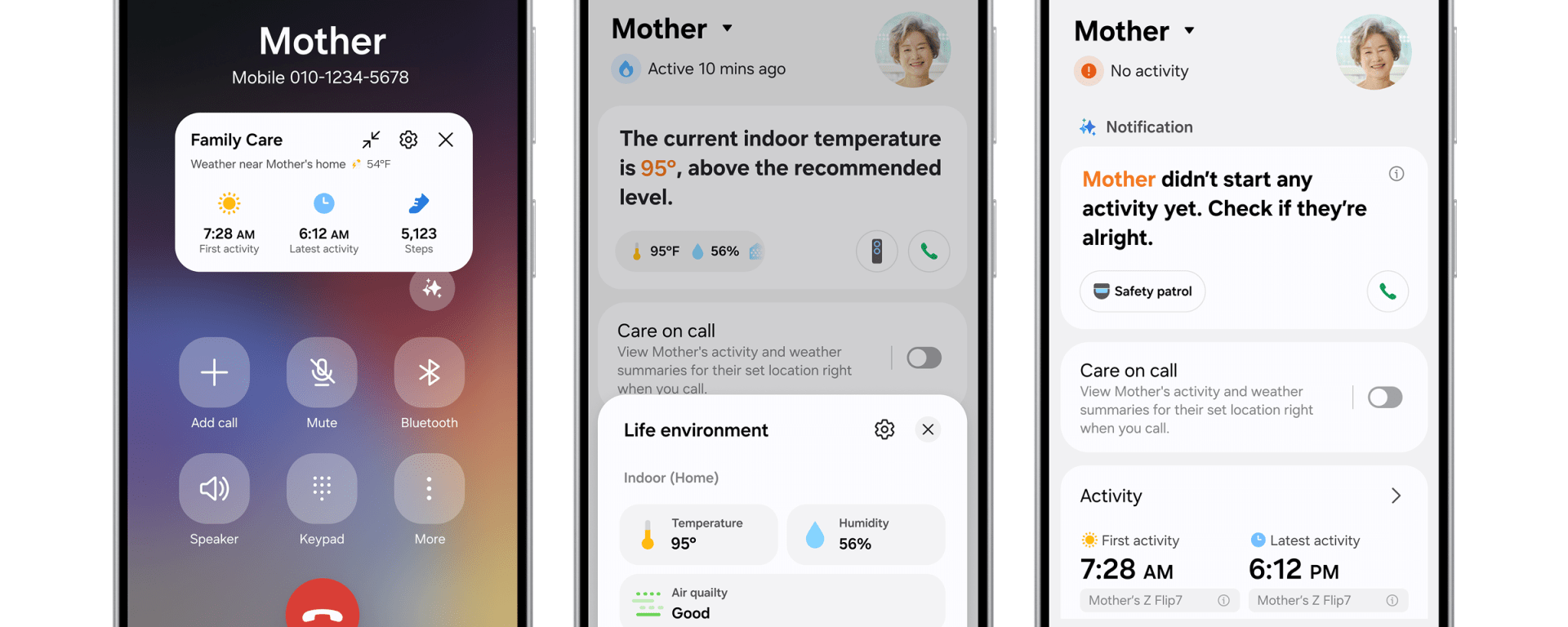
Samsung has updated its SmartThings platform to strengthen remote family care, introducing AI-driven features aimed at supporting ageing relatives living independently.
Samsung Pushes SmartThings Deeper Into Home Based Care With New Monitoring Tools
A missed morning routine, a change in room temperature, or an unexplained gap in activity are small signals that can carry weight when an older person is living alone. Samsung’s latest SmartThings update is built around capturing those signals and turning them into prompts for action.
The update adds a set of AI-driven features to its SmartThings ecosystem aimed at helping families keep track of relatives remotely. While positioned as a lifestyle upgrade, the changes bring the platform closer to the kind of functionality seen in dedicated care technology.
SmartThings Evolves From Automation To Oversight
The SmartThings platform has traditionally focused on linking household devices such as lighting, appliances and sensors, into a single control system. The new update shifts that emphasis towards oversight and interpretation.
The enhanced Family Care service introduces several tools designed to give a clearer picture of daily life inside the home. “Care on Call” provides contextual information before a phone conversation begins, allowing a caller to see when activity first started that day or when movement was last detected.
Alongside this, “Care Insight” aggregates longer-term data, identifying changes in patterns such as reduced movement or altered device use. These insights are positioned as a way to spot gradual decline rather than respond only to emergencies.
Samsung has also expanded its “Safe Patrol” feature, enabling a connected robot vacuum to act as a remote inspection tool if activity drops off. Through its onboard camera and audio, users can check in visually and communicate if needed.
Blurring The Line Between Consumer Tech And Care Tools
What makes this update notable is not any single feature, but the direction of travel. SmartThings is moving closer to a passive monitoring system, one that observes behaviour, flags anomalies and enables remote response.
In the UK, similar capabilities are typically delivered through telecare services commissioned by local authorities or provided by specialist suppliers. These systems often include motion sensors, fall detectors and call alarms.
Samsung’s approach differs in that it builds on devices many households already own. Air conditioners, air purifiers and other connected appliances are used to generate environmental data, while smartphones and home hubs act as interfaces for alerts and insights.
For families arranging their own support, this could offer a more accessible entry point into care technology. But it also raises questions about how such tools sit alongside regulated services.
Embedding Care Insights Into Everyday Devices
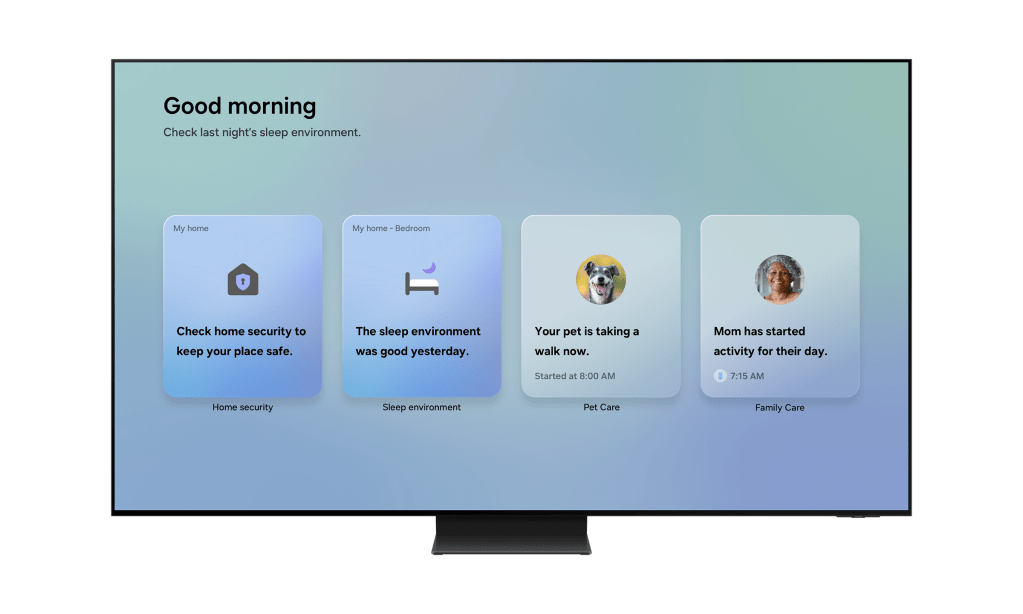
A parallel development is the expansion of Samsung’s “Now Brief” feature, which aggregates information about the home and its occupants into a single, automated update.
Originally designed for smartphones, Now Brief is being extended to televisions and smart refrigerators. The idea is that users encounter updates passively, when approaching a screen or interacting with a device, rather than actively seeking them out.
This ambient model reflects a wider shift in digital health, where information is delivered in context rather than through dedicated platforms. In a care setting, that could make it easier for informal carers to stay informed without adding to cognitive load.
The inclusion of data such as sleep patterns, home environment conditions and daily activity suggests a move towards a more holistic view of wellbeing, albeit one generated outside formal healthcare systems.
Practical Implications For UK Providers
For care providers and local authorities, the emergence of consumer-led monitoring tools presents both opportunities and complications.
On one level, these platforms could complement existing services, particularly in cases where individuals or families are self-managing care. Early visibility of changes in routine or environment may help prevent escalation and reduce demand on frontline services.
However, the lack of direct integration with NHS or social care systems limits their immediate utility in formal care pathways. Data generated by SmartThings is not automatically shared with clinicians or care teams, meaning its value depends on how it is interpreted and acted upon by users.
There are also considerations around safeguarding and accountability. If a system flags unusual activity, responsibility for responding remains with the individual or family, rather than a monitored service.
Data, Trust And Adoption Challenges
As with many forms of care technology, adoption will hinge on trust.
Continuous monitoring particularly when it involves cameras or detailed behavioural tracking can be sensitive. Users need clarity on what is being collected, how it is used and who has access.
There is also the question of digital confidence. While smart home devices are becoming more common, not all users, particularly older adults, are comfortable managing interconnected systems or interpreting data outputs.
Cost may be another factor. Although SmartThings itself is widely available, some features rely on specific hardware, which may not be accessible to all households.
Despite these challenges, the update reflects a broader shift towards distributed models of care, where responsibility is shared across individuals, families and technology platforms.
Samsung’s SmartThings update marks a clear move beyond home automation into the territory of care technology. By combining monitoring, insight and communication tools, the platform begins to replicate functions traditionally associated with telecare services.

