

A new cloud-based robotics system developed by researchers could help address workforce shortages in hospitals and care environments. The technology promises to automate routine logistical tasks, freeing up staff time and reducing pressure across health and social care services.
Cloud Controlled Robots Could Streamline Operations
Within the UK care sector, workforce challenges have become particularly acute in both hospital settings and community-based services, where staff are often required to juggle clinical responsibilities with time-consuming logistical tasks.
Against this backdrop, a new development from the University of Waterloo in Canada is drawing attention for its potential to reshape how routine operations are handled in care environments. The research introduces a cloud-based autonomous robotics system designed to take on basic transport and logistical duties, offering a possible route to easing pressure on frontline staff.
Cloud Robotics Meets Healthcare Logistics
The system developed by the University of Waterloo team centres on a network of ceiling-mounted sensor nodes equipped with cameras, LiDAR and onboard processing capabilities. These nodes communicate with cloud-based algorithms that coordinate the movement of autonomous robots within complex indoor environments such as hospitals and long-term care facilities.
Rather than relying solely on onboard sensors, the robots receive instructions from the cloud, allowing them to navigate busy spaces more effectively while avoiding obstacles and people. This infrastructure-based approach aims to improve both safety and efficiency, particularly in environments where unpredictability is the norm.
Professor Amir Khajepour, who leads the project, said, “There is a need for creative solutions for transportation systems in the healthcare industry that are cost-effective, on the one hand, and can perform basic logistical duties to ease the burden on nurses and staff,”.
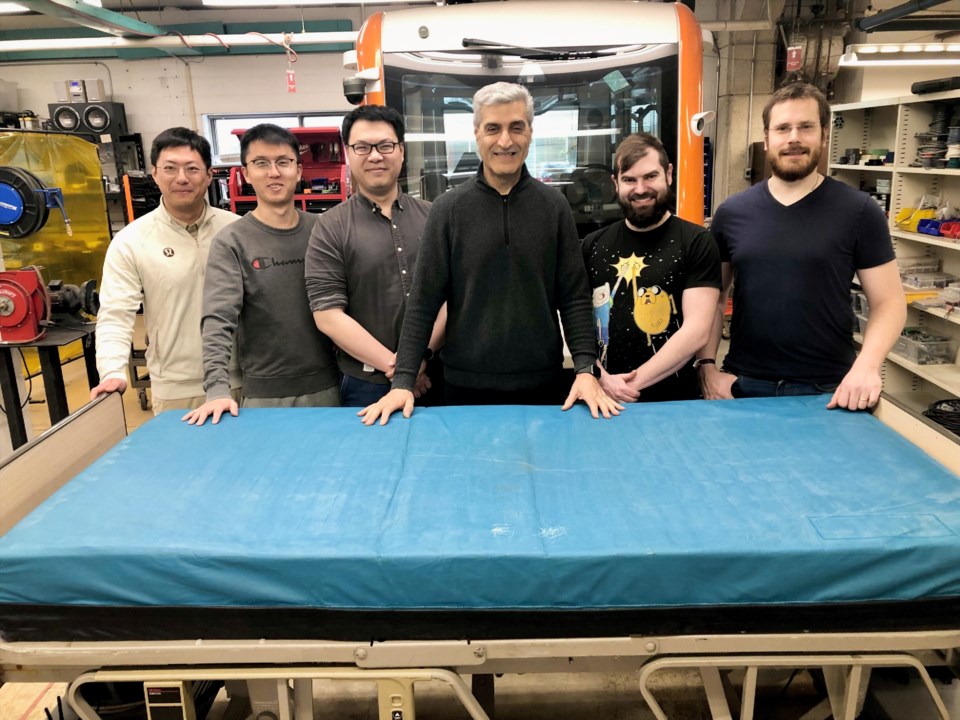
The research team has already tested the system using a retrofitted robotic hospital bed capable of transporting supplies autonomously. While still at an experimental stage, the concept demonstrates how robotics could integrate into everyday workflows.
Why This Matters For The UK Care Sector
The UK’s health and social care system faces similar workforce pressures to those outlined globally. NHS England has repeatedly highlighted staffing gaps, while Skills for Care estimates tens of thousands of vacancies across adult social care services.
In practice, clinicians and care workers often spend a significant portion of their time on tasks such as moving equipment, transporting supplies, or managing internal logistics. These activities, while essential, do not require clinical expertise and can contribute to fatigue and inefficiency.
The introduction of autonomous systems capable of handling such duties could have tangible benefits. By reallocating time towards patient-facing care, providers may improve both staff wellbeing and service quality.
This aligns with broader policy ambitions in the UK to expand the use of home care technology and community health technology. The NHS Long Term Plan and subsequent digital strategies have emphasised the importance of innovation in addressing workforce and productivity challenges.
Community And Home Based Care
Although the Waterloo system has been developed with hospital environments in mind, its underlying principles could extend to community care and even home care settings in the future.
In domiciliary care, where staff travel between homes and often operate with limited support infrastructure, automation has traditionally been harder to implement. However, as smart home technologies and connected devices become more prevalent, the integration of robotics could begin to play a role.
For example, smaller-scale autonomous systems could assist with delivering medication within supported living environments or managing supplies in community health hubs. In extra care housing schemes, where communal infrastructure already exists, ceiling-mounted sensors and shared robotics could become more feasible.
For local authorities and integrated care systems, such innovations may offer new ways to manage resources more effectively, particularly as demand for community-based services continues to grow.
Safety Standards And Real World Deployment Issues
Despite the promise of cloud-based robotics, significant barriers remain before such systems can be deployed widely in the UK care sector. Healthcare environments are subject to strict safety regulations, and any technology introduced must meet rigorous standards for reliability and risk management.
Professor Khajepour acknowledged this challenge, noting that hospitals are “highly regulated environments with strict safety standards”. This is a critical consideration for UK providers, where compliance with Care Quality Commission (CQC) standards and NHS safety frameworks is essential.
There are also questions around data governance and cybersecurity, particularly given the reliance on cloud connectivity and real-time data exchange. Ensuring that systems are secure and compliant with UK data protection laws will be vital.
From an industry perspective, similar themes have been highlighted in reports from organisations such as NHS England and the Health Foundation, which stress that digital health innovations must be carefully integrated into existing workflows to deliver real benefits.
Technology suppliers working in care have also pointed to the importance of user-centred design. Systems that reduce workload without adding complexity are more likely to be adopted successfully.
One of the most notable aspects of the Waterloo research is its emphasis on infrastructure-based intelligence. By embedding sensors into the environment and leveraging cloud computing, the system shifts complexity away from individual robots.
This approach mirrors wider trends in digital health, where interconnected platforms and data-driven decision-making are becoming increasingly important. In the UK, initiatives around smart hospitals and digitally enabled community services are exploring similar concepts.
For care providers, this raises important strategic questions about investment in infrastructure. While the upfront costs may be significant, the long-term benefits in terms of efficiency and scalability could be substantial.
It also highlights the growing convergence between care technology and broader smart building technologies, suggesting that future care environments may be designed with automation in mind from the outset.

