
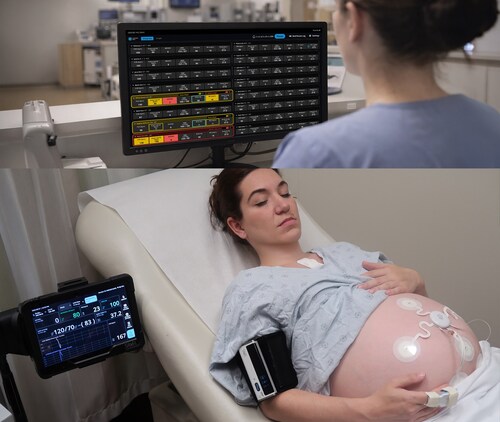
A newly cleared wireless maternal monitoring platform in the US reflects a wider shift toward continuous, data-driven care. For the UK, it highlights how digital health tools could reshape maternity services across hospitals, homes and communities.
Wireless Maternal Monitoring Device Promises Safer And Flexible Care
Maternity care is under increasing scrutiny in the UK, with ongoing concerns about safety, staffing pressures and inequalities in outcomes. At the same time, the NHS is pushing forward with digital transformation, particularly in community and home-based care.
The recent US clearance of Sibel Health’s ANNE Maternal system, a fully wireless maternal and fetal monitoring platform, offers a timely example of how technology is evolving.
While developed for a different healthcare system, its underlying approach reflects trends that are directly relevant to the UK care sector.
From Bedside Monitoring To Continuous Data
Traditional monitoring during labour often relies on wired equipment that can limit movement and keep patients confined to bed.
The ANNE Maternal system takes a different approach, using wearable sensors to continuously track both maternal vital signs and fetal heart rate without physical connections.
Data is streamed in real time, with built-in alert systems designed to flag early signs of deterioration. The inclusion of a digital Modified Early Obstetric Warning System reflects a wider move in digital health towards combining monitoring with decision support, rather than simply collecting data.
This shift mirrors developments already underway in other areas of healthcare, where continuous monitoring is becoming more common, particularly in managing long-term conditions at home.
Relevance For UK Maternity And Community Care
Although the technology has been cleared in the United States, its potential applications align closely with NHS priorities. There has been growing interest in expanding care beyond hospital settings, including midwife-led units and home births.
Wireless monitoring could support these models by enabling closer clinical oversight without restricting mobility. It may also allow earlier discharge after birth, with continued monitoring in the home, which is increasingly important as services face capacity constraints.
Tools that can automate aspects of monitoring and provide early warnings could help clinicians manage workloads more effectively, though they are unlikely to replace the need for skilled staff.
Evidence Safety And System Pressures
The case for improved monitoring is well established. UK and international research has consistently shown that delays in recognising deterioration contribute to poor maternal outcomes. National guidance already supports the use of early warning systems, but implementation varies.
Digital platforms that automate these processes could improve consistency, particularly in busy or understaffed settings. However, adoption in the NHS depends on clear evidence of benefit, as well as compatibility with existing systems and workflows.
There are also questions around data integration and governance. Continuous monitoring generates large volumes of data, which must be securely managed and meaningfully integrated into clinical decision-making.
A Global Model With Local Implications
One notable aspect of the ANNE Maternal platform is its design for use in both high-income and resource-limited settings. Backed by global health funding, it has already been deployed in countries where access to basic monitoring is limited.
This focus on simplicity and portability may also appeal to UK providers, particularly in community settings where infrastructure can be more constrained. Technologies that are easy to use and do not rely on complex setups are more likely to be adopted at scale.
At the same time, the company’s plans to introduce AI-driven features reflect a broader direction of travel in care technology. Predictive analytics and automated alerts are expected to play a growing role in identifying risk earlier and supporting clinical decisions.

