
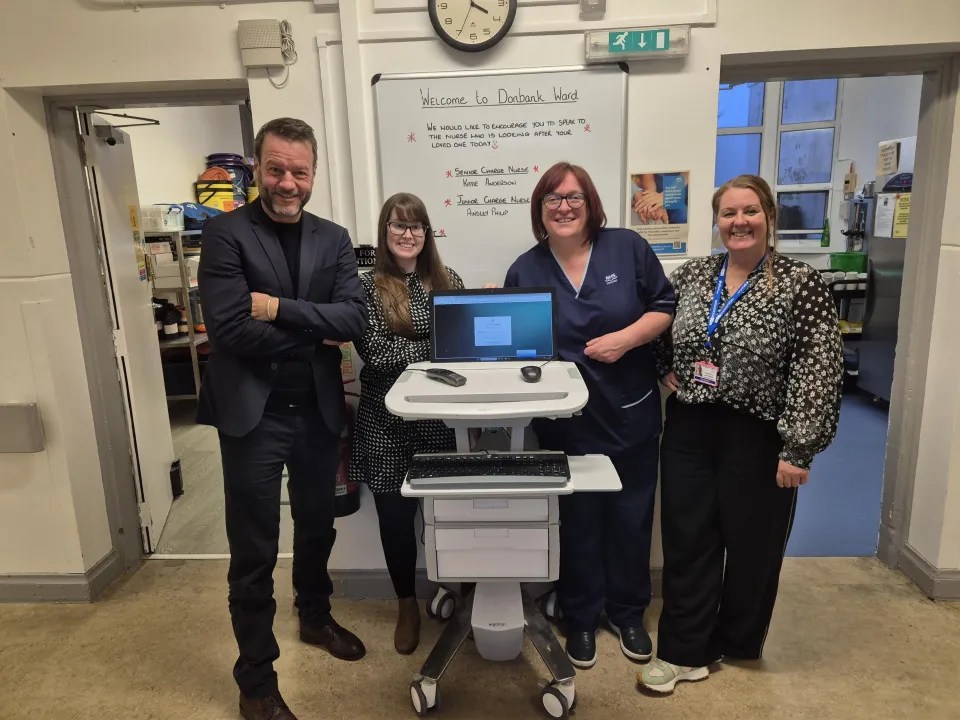
A new pilot in NHS Grampian is testing ambient voice technology to reduce administrative burden and improve patient interactions. Early feedback from nurses suggests the AI tool is already transforming how care conversations are captured and delivered.
NHS Grampian Trials Ambient Voice Technology in Clinical Setting
A three-month pilot of ambient voice technology in NHS Grampian is offering a glimpse into how digital health tools could reshape clinical workflows across the UK care sector.
The initiative, led by the organisation’s Innovation Hub in partnership with Aberdeenshire Health and Social Care Partnership, is exploring whether artificial intelligence can reduce the administrative burden on frontline staff while enhancing the quality of patient care.
The trial is taking place at Inverurie Hospital’s Donbank Ward, where 13 staff nurses are using the technology during routine clinical interactions. Patients who consent to participate are included in the pilot, which runs until mid-May.
At its core, the system uses ambient voice technology to listen to conversations between nurses, patients and families, and automatically generate structured clinical notes. These notes are then reviewed and edited by clinicians, ensuring accuracy and maintaining clinical oversight.
Reducing Administrative Burden in the UK Care Sector
The pilot aims to address that issue by using AI to automate note-taking during key interactions such as admission assessments and twice-daily clinical reviews. The technology is built on the Corti healthcare AI platform, which has been designed specifically for clinical environments.
Staff feedback suggests the system could significantly reduce time spent on paperwork. Nurses involved in the trial report that documentation time has, in some cases, been halved.
Rebecca Thomson, Project Support Officer for NHS Grampian’s Innovation Hub, said the pilot is focused on tackling one of the NHS’s most pressing operational challenges.
“Our pilot with Corti aims to explore whether ambient voice technology can help address the huge administration burden affecting our NHS. By recording and automatically summarising conversations with patients, the technology enables staff to deliver more person-centred care while maintaining strong clinical oversight and patient safety.”
The implications extend beyond hospitals. If successful, similar tools could be deployed across community health services and home care settings, where documentation requirements are equally demanding.
Enhancing Person-Centred Care Through Digital Health Tools
Beyond efficiency gains, one of the most notable outcomes of the pilot has been the reported improvement in the quality of patient interactions.
Nurses say the technology allows them to be more present during conversations, rather than focusing on note-taking. This shift appears to be encouraging more open and meaningful dialogue with patients.
Katie Anderson, senior charge nurse and clinical lead for the pilot, highlighted the impact on patient engagement. She said, “It makes a real difference when patients feel someone is really listening to them. And it helps us record the patient’s journey much more accurately.”
She added, “We used to have to try and remember what was said during observations and record this in notes later. Using the tech frees up mind space so we can have a really good conversation.”
Some patients have reportedly shared more personal reflections and emotional concerns than they might have otherwise disclosed. One patient involved in the trial noted that the transcript captured not just what was said, but how they were feeling, an important factor in holistic care.
This aligns with broader policy priorities across the UK, where person-centred care is increasingly emphasised in both NHS and social care strategies.
Training AI to Understand Local Context and Language
One of the more distinctive aspects of the pilot is the effort to train the AI system to understand the local Doric dialect spoken in parts of north-east Scotland.
Nurses are actively editing transcripts in real time, helping the system learn regional language nuances. While this has presented challenges, staff report occasional confusion by the system, it also highlights the adaptability of modern AI tools.
Florian Schwiecker, Chief Partnership Officer at Corti, visited Donbank Ward to see the technology in use and noted the importance of local ownership in successful implementation.
Schwiecker said, “What struck me visiting Donbank Ward was how much ownership Katie’s team have taken over the technology. They’re teaching it Doric, they’re shaping how it learns and they’re gaining more quality time with patients because of it.”

Implications for Community Health Technology and Home Care
While the current pilot is hospital-based, the potential applications for community health technology and home care are significant.
In domiciliary care settings, where staff often work independently and manage extensive documentation requirements, ambient voice technology could streamline workflows and improve record-keeping accuracy. It may also support better continuity of care by enhancing the quality of information shared between professionals.
For local authorities and care providers, this type of social care innovation could help address workforce pressures by reducing administrative strain and improving job satisfaction. Staff retention remains a critical issue across the UK care sector, and tools that enable more meaningful patient interaction may contribute to improved morale.
Additionally, more accurate and comprehensive documentation could support better care planning and outcomes monitoring, particularly for individuals receiving long-term care in the community.
Scaling Ambient Voice AI Across the NHS
The outcome of the three-month evaluation will determine whether the technology could be rolled out more widely across NHS Grampian and potentially beyond.
If the pilot demonstrates measurable improvements in efficiency, care quality and staff experience, it could pave the way for broader adoption of ambient voice tools across the NHS and social care systems.
However, scaling such technology will require careful consideration of infrastructure, training, and interoperability with existing digital systems. Integration with electronic health records, in particular, will be critical to ensuring seamless workflows.
There is also the question of equity, ensuring that innovations are accessible across different regions and care settings, including under-resourced community services.


One thought on “Ambient Voice AI Pilot in NHS Grampian Aims to Slash Admin and Improve Patient Care”