
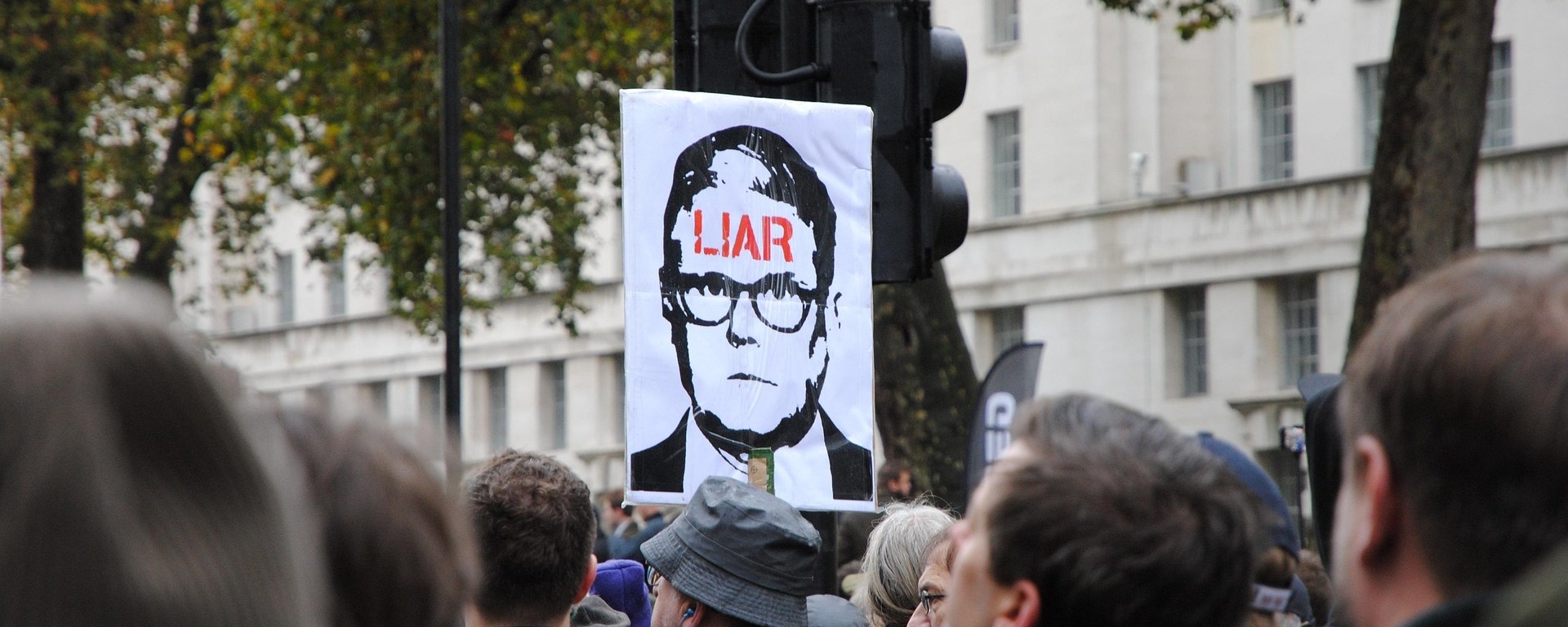
Keir Starmer walked away from Downing Street on 22 June 2026 after nearly two years of turbulent NHS reform, a bitterly contested data platform deal, and a social care agenda that never found its footing.
Starmer Leaves Office With NHS Reform Unfinished and Palantir Deal Unresolved
When Keir Starmer stood outside Number Ten on Monday morning and announced he was resigning as Prime Minister and Labour leader, he reached, almost instinctively, for the health service. He pointed to what he described as the fastest fall in NHS waiting lists in 17 years, alongside achievements on wages, investment and infrastructure. It was a very Starmer moment, data-led, measured, and contested almost before he had finished speaking.
The resignation came after a weekend of mounting pressure following Andy Burnham’s victory in the Makerfield by-election, with scores of Labour MPs having spent weeks demanding that Starmer set a timetable for his departure.
The political collapse was swift, and it caught even his own supporters off guard. But for anyone who has spent the past two years watching the government’s approach to health and social care from close quarters, the deeper story is less about the manner of his leaving and more about what his administration actually achieved and what it failed to deliver for the people who use and work in Britain’s care system.
Ambition For Health And Social Care And A Ten Year Plan
Whatever its critics say, the Starmer administration came into office in July 2024 with one of the most detailed health reform programmes a Labour government had brought to the table in years. The Health Secretary, Wes Streeting, was appointed with high expectations and made no effort to manage them down. The commitment to return elective waiting times to levels the NHS had not achieved in over a decade was the centrepiece, but it sat alongside pledges on A&E performance, ambulance response times and cancer waiting times.
The standout policy commitment of the whole administration was the NHS Ten Year Plan, published in July 2025. It set out an ambition for the NHS to become digital by default, with a new Neighbourhood Health Service rolling out diagnostics, mental health services, post-operative care, rehabilitation and nursing into community settings across England. The plan committed to neighbourhood health centres that would house services under one roof, eventually open 12 hours a day six days a week, staffed by a blend of GPs, nurses, social care workers, pharmacists, health visitors and paramedics.
For those working in home care and community health technology, this was significant. The Ten Year Plan placed technology at its centre, with the NHS App evolving into a digital front door, AI tools built into diagnostics and safety systems, and an Innovator Passport designed to fast-track new technologies through the system. On paper, it represented the kind of structural shift that community health technology companies have been calling for since long before Labour came to power.
“Reform or Die”
Launching the plan, Starmer said the NHS had to “reform or die,” arguing that the service had become addicted to a sticking-plaster approach and was unable to face up to challenges now, let alone in the future. It was the kind of language the sector rarely hears from Downing Street. Whether the follow-through matched the rhetoric is a different matter.
Success And Short Comings For The NHS
In the first year, there were genuine signs of improvement. Hospital staff turnover fell, the number of salaried GPs increased substantially, and there were modest performance gains in elective care. The waiting list did fall, at least for a period. The Elective Reform Plan targeted 65% of patients treated within 18 weeks by the end of 2026, backed by Community Diagnostic Centres operating for extended hours and 17 new surgical hubs designed to add up to half a million appointments a year. Early this year Kent virtual ward saved nearly 5,000 bed days in just three months, which supports the community-level result the Ten Year Plan was designed to scale.
But the data told a more complicated story as the months went on. The March 2026 figures, which Streeting cited in his resignation letter as evidence of delivery, showed 65% of patients treated within 18 weeks at the national level. The problem was that nearly half of all trusts, 71 out of 150, did not hit that figure. A national average, as more than a few health commentators pointed out, can mask a great deal of local failure.
Emergency care remained in serious trouble throughout. In May 2026, an average of 2,241 patients a day were experiencing corridor care in English emergency departments, with a further 669 in hospital wards. The number of patients waiting 12 or more hours in A&E before being transferred, admitted or discharged was the highest for any May on record, at 147,957. Research published in June by the University of Manchester found that the safety of NHS virtual wards, a key plank of the community care shift, depended as much on the unseen labour of patients and carers as it did on digital infrastructure, raising questions about whether the model was being rolled out faster than the evidence warranted.
On social care, the failure was harder to dress up. The government chose to launch the Casey Commission on adult social care reform, with its final report not expected until 2028. The Institute for Government described this as the government effectively deferring responsibility for reform in this parliament. For care providers, commissioners and the people who depend on good-quality home care, this was not a strategic choice that carried any sense of urgency. The decision to abolish the health and care visa, which had underpinned significant recent growth in the care workforce, added further pressure to a sector already struggling to recruit and retain staff.
The abolition of NHS England itself consumed enormous management bandwidth. Announced in March 2025, the two-year merger plan with the Department of Health and Social Care pulled senior leaders and organisations away from performance improvement at exactly the moment the service needed to be focused outward rather than inward. It was a reorganisation that the Institute for Government described as chaotic in its handling, and one that Streeting himself had previously ruled out entirely.
The Plagued Palantir Proposal
No account of this government’s digital health record is complete without confronting the Palantir controversy, and it deserves more than a footnote.
The Federated Data Platform is an AI-enabled system meant to knit together disparate NHS data sources across England. In principle, a well-governed, interoperable data platform of this kind could transform the quality of care planning, population health management and resource allocation across the health service. The problem was the company awarded the contract.
The Science, Innovation and Technology Select Committee recommended ending the £330 million NHS contract with Palantir Technologies, warning that the UK was becoming dangerously dependent on a single US supplier and identifying the company as the most concerning tech provider operating across UK public services. That is a striking verdict from a parliamentary committee, and it did not appear from nowhere. Ministers ordered a full review of the contract in June ahead of a 2027 break clause decision, and the pressure from within the NHS has not eased since.

By early 2026, the campaign against Palantir’s NHS involvement had drawn support from Medact, the Good Law Project, Privacy International, Corporate Watch and Amnesty International. Approximately 50,000 patients wrote to local trust boards urging them not to adopt the platform. The British Medical Association went further still. After passing a motion at its 2025 Annual General Meeting opposing the FDP rollout, the BMA announced in February 2026 that it would advise doctors to limit their engagement with the platform because of the company’s wider track record.
There is also concern around Palantirs involvement with the ongoing genocide in Palestine and Lebabnon. It has been suggested by human rights groups that their technology is being used by the IDF to target individuals. And with the alarming number of videos showing evidence of double tap attacks – a strike that waits for people to tend to the wounded before striking again – Healthcare professionals don’t want to use a tool that is involved with killing health workers which is a war crime under International Humanitarian Law.
The concerns were both principled and practical. Chi Onwurah, who chairs the Science, Innovation and Technology Committee, said the issues raised around Palantir were legitimate and substantive, covering contract transparency, vendor lock-in, value for money and data security. Her observation about the wider context is worth sitting with NHS staff burned out after Covid and years of austerity were being asked to adopt a system tied to a company they fundamentally did not trust, making an already difficult digital transition harder still.
Leaked documents suggested the FDP was running eight to ten times slower at analysing data than the NHS tools it was meant to replace. Some Integrated Care Boards, including Greater Manchester, declined to adopt it on the basis that their existing data capability was superior. Meanwhile Palantir’s presence across UK public services expanded well beyond health, with an investigation in January 2026 identifying at least 34 contracts across ten government departments worth a combined minimum of £670 million, including deals with the Ministry of Defence, the Home Office and the Government Digital Service. The government sought legal advice on activating a break clause in the NHS contract. Whether Starmer’s successor will use it remains an open question, but the pressure to act is substantial.
What Does Andy Burnham Have To Offer For Care Technology
Andy Burnham’s victory in Makerfield last week set the stage for his expected leadership bid, and his arrival at Westminster was enough to accelerate Starmer’s departure. For the care technology sector, the prospect of a Burnham premiership raises a genuinely different set of questions to the ones the past two years have posed.

Burnham’s credentials on health and care integration go back further than his time as Greater Manchester Mayor. As Health and Social Care Secretary in 2009, he proposed a unified National Care Service for England, arguing that the existing means-tested system represented a cruel lottery for the people most in need of support. That idea never made it through the political system then. It now forms a central part of his pitch for the Labour leadership.
Among his stated policy commitments is a National Care Service integrating care fully into the NHS, funded by a new social care levy. If that commitment translates into policy at scale, the structural implications for care technology are significant. Genuine integration between health and social care drives demand for interoperable platforms, shared care records, community health monitoring tools and population health analytics in ways that a hospital-centric model simply does not.
Streeting acknowledged Burnham’s particular understanding of integrated care before his own resignation, describing him as a mayor who had placed public health at the heart of his agenda and who understood his region in ways that officials in Whitehall did not. Coming from Streeting, that was as close to an endorsement as the political circumstances allowed.
The harder question is whether Burnham, if he reaches Downing Street, would be willing to challenge the Treasury orthodoxy that has constrained social care investment for decades. Analysts have noted that his promises on growth and inequality cannot be delivered without treating social infrastructure as a genuine investment category rather than a spending burden. That is a fiscal and political battle that no recent government has been willing to fight in full.
The Future For Health And Social Care Under New Leadership
Keir Starmer’s tenure was not a failure by any simple measure. The NHS Ten Year Plan was a serious document. The neighbourhood health ambition is the right direction. Waiting lists did fall. But social care was pushed back to 2028. The Palantir deal became an albatross. And the abolition of NHS England created disruption at a moment when the system could least afford it.
For care providers, technology companies and commissioners working to improve outcomes for people at home and in the community, the next months matter enormously. The structural foundations Starmer’s government laid are either a platform to build on or a set of half-finished commitments waiting for a successor with the political will to see them through. The question of what the new Health Secretary does with the NHS AI workforce plan already facing a formal campaign calling for its rejection,will be an early signal of which direction the next government intends to take. Whether Andy Burnham turns out to be the leader the sector has been waiting for is the question Britain’s care technology community is now asking.


5 thoughts on “Kier Starmer’s Stained NHS Legacy and the Palantir Problem”