
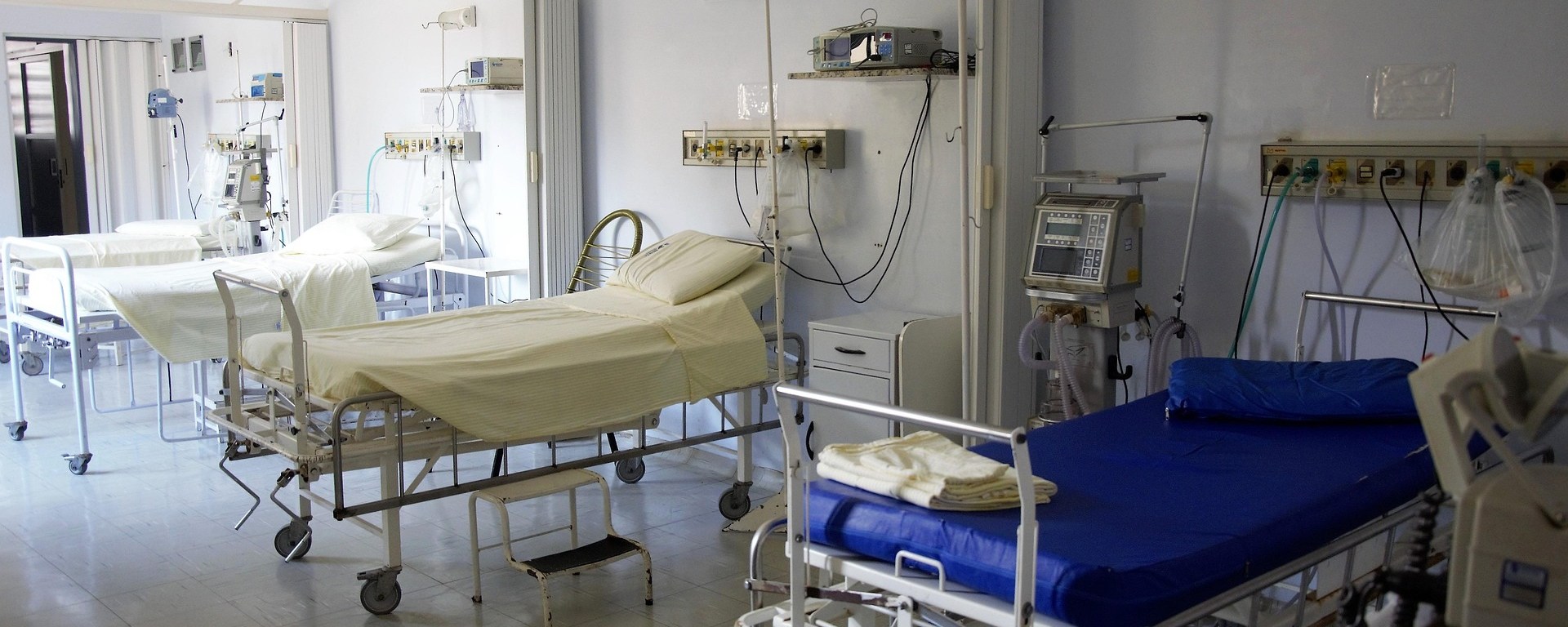
A service operating out of Salisbury is offering hospital-standard clinical care delivered directly to patients’ homes, with the backing of occupational health provider Healix Health.
Salisbury Firm Launches Hospital-Level Home Care Service Backed By Healix Health
Delayed transfer of care remains one of the most stubborn inefficiencies in the NHS. Patients who are clinically ready to leave hospital but who lack the community support to do so safely continue to occupy acute beds that trusts simply cannot afford to lose.
NHS England’s own data has consistently shown tens of thousands of bed days lost each month to delayed discharge, with inadequate social care provision and insufficient step-down services among the leading causes.
Hospital@Home based in Salisbury and operating across parts of the South West, the service identifies patients suitable for early discharge and transfers their care into a home environment without, it argues, compromising clinical standards.
What The Service Actually Delivers
Hospital@Home operates through multidisciplinary teams that include nurses, physiotherapists, occupational therapists, pharmacists, trusted assessors, and healthcare support workers. Patients receive personalised care packages at home, supported by a round-the-clock nurse-led urgent response line and remote monitoring technology, with GP oversight maintained throughout.
The model is supported by Healix Health, a company with an established background in occupational and international health services. The partnership gives Hospital@Home access to clinical infrastructure and governance frameworks that smaller independent operators would typically struggle to build from scratch, no minor consideration given CQC’s scrutiny of home-based clinical services.
The service is led commercially by Steve Carter, formerly chief commercial officer, and clinically by Rebecca Williams. Between them, the two bring over seven decades of healthcare management experience.
The Numbers Being Cited
The service claims cost savings of up to 55 per cent for the NHS compared with equivalent inpatient care, alongside a reported improvement in patient outcomes of more than 23 per cent. Hospital@Home also states it has already freed up the equivalent of an additional hospital ward’s worth of capacity on a weekly basis in areas where it is operating.
NHS England’s own virtual ward programme, accelerated through the 2022 discharge funding reforms, has demonstrated that hospital-at-home models can deliver meaningful reductions in length of stay and readmission rates when implemented with sufficient clinical oversight and multidisciplinary staffing precisely the model Hospital@Home describes.
Expansion Plans And Workforce Implications
The service is actively expanding beyond its current South West England footprint and has announced plans to recruit approximately 30 additional staff for each new area it enters. That figure is notable. At a time when domiciliary care providers are struggling to maintain existing rotas Skills for Care’s annual workforce report has consistently identified vacancy rates above 10 per cent in the adult social care sector any new entrant planning to hire at scale across multiple geographies will need a credible workforce strategy, not just an ambition.
Hospital@Home’s model is not new in concept. The NHS has been piloting hospital-at-home schemes for years, and the post-pandemic push to develop virtual ward capacity has produced a patchwork of services across integrated care systems. What distinguishes commercial entrants like Hospital@Home is their ability to move faster than NHS procurement cycles and to operate with staffing flexibility that NHS community health trusts often cannot match.
The more interesting question for ICB commissioners in the South West and eventually beyond is whether a commercially delivered hospital-at-home service represents a durable solution to discharge pressure, or a stop-gap that works while capacity remains constrained and funding is available. The answer will depend on how Hospital@Home navigates contracting, clinical governance, and the political sensitivities that tend to surround private providers taking on services that the NHS has traditionally delivered itself.
Early interest may have exceeded expectations. Whether that translates into sustained contracts and measurable system impact is the next test.
 Innovative Care NEWS
One thought on “New Salisbury Service Promises To Free Up A Ward’s Worth Of NHS Beds Every Week”