

A leaked NHS workforce plan signals a dramatic shift towards artificial intelligence and community-based care as health officials warn that existing staffing trajectories risk financial catastrophe.
AI At The Heart Of A Transformed NHS Workforce Strategy
A confidential NHS workforce blueprint, reported by the Financial Times, has outlined a radical reimagining of how England’s health service will be staffed and run over the coming decade.
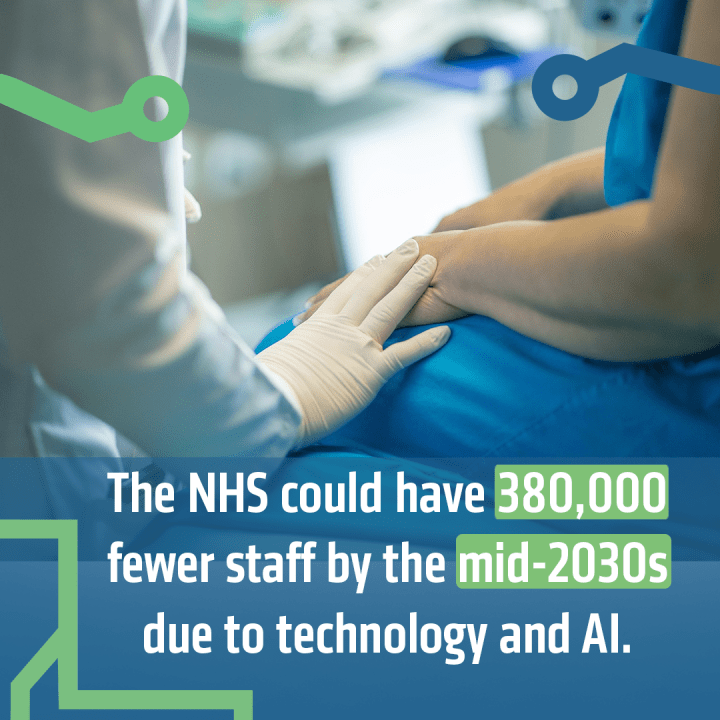
Drafted under former health secretary Wes Streeting before his resignation last week, the document proposes reducing annual workforce growth from the 2.6 to 2.9 per cent target established in 2023 to somewhere between 1.1 and 2 per cent. The consequence, officials acknowledge, could be up to 380,000 fewer NHS employees by the mid-2030s compared with what was previously planned.
For those working across community health and home care, the document represents more than a staffing adjustment. It signals a structural rethinking of where care is delivered, by whom, and with what support with artificial intelligence positioned as a central enabler of that transition.
Rethinking The Role Of Technology In Clinical Settings
The draft plan does not frame the AI pivot as a shortcut. Instead, it argues that a decade of significant doctor recruitment has failed to improve patient access, experience, or outcomes, while productivity has declined. The previous plan which would have expanded the NHS workforce from 1.4 million to 2.3 million by the mid-2030s is described as financially unsustainable.
In response, the document envisages AI being deployed in genuinely clinical contexts, using patient data to structure consultations, flag risk levels, and surface relevant medical history.
The plan goes further still, acknowledging scenarios in which technology might entirely replace certain functions currently performed by human staff. To incentivise adoption, the draft proposes that employees who drive measurable productivity gains through technology could receive bonuses or additional leave.
The Shift Towards Community And Home-Based Care
The draft envisages far more care being delivered in GP surgeries, community clinics, and patients’ own homes.
Nursing projections reflect this reorientation starkly. The previous plan anticipated between 170,000 and 190,000 additional nurses over the coming decade, the revised figure sits at around 50,000. Meanwhile, the document projects that up to 49,000 more GPs could be needed by 2035, a 23 per cent increase on the earlier estimate as primary and community care absorbs demand previously handled in acute settings.
Scepticism From Unions And Independent Analysts
The proposals have not been universally welcomed. Alan Lofthouse, deputy head of health at Unison, cautioned that replacing skilled, trained clinical staff with unproven technology carries real risk, a view widely shared among frontline workers and providers who have witnessed previous digital transformation programmes stall or underdeliver.
Paul Johnson, former director of the Institute for Fiscal Studies, questioned whether the new plan would meaningfully reduce overall NHS spending, and raised concerns about the repeated revision of long-term workforce strategies. His observation that the NHS struggles to make effective use of technology from two decades ago, let alone contemporary AI will feel familiar to anyone who has tried to implement digital care tools across community services, where legacy systems, data interoperability challenges, and uneven digital literacy continue to frustrate progress.
What Comes Next For The UK Care Technology Sector
James Murray, newly appointed as health secretary, will now determine whether to proceed with proposals expected to be published within weeks. Whatever the final version contains, the underlying direction appears settled: the NHS is moving towards a model in which technology takes on a more substantive clinical role, and in which community and home-based care shoulder a greater proportion of overall demand.
For care providers, commissioners, and technology suppliers, this is a moment that calls for active engagement rather than passive observation. The infrastructure, governance frameworks, and workforce digital skills required to make this transition work safely do not yet exist uniformly across the sector. Building them will require sustained collaboration between the NHS, local authorities, technology companies, and the people who receive care in their homes and communities.
The ambition outlined in this plan is not without merit. But ambition, without the operational foundations to support it, delivers neither efficiency nor better care.

