
An NHS-backed rollout of AI-enabled smart lighting across care homes in Lancashire and South Cumbria has reduced falls by nearly a third, according to an independent evaluation by Lancaster University.
One Third Of Falls Prevented Through AI Smart Lights
Falls remain one of the biggest causes of emergency hospital admissions among older people living in residential care settings across the UK. As care providers support residents with increasingly complex needs, including frailty, dementia and long-term health conditions, pressure is growing on the health and social care system to find more effective ways to prevent avoidable harm.
NHS Lancashire and South Cumbria Integrated Care Board (ICB) has published the results of a large-scale deployment of AI-powered smart lighting technology in care homes. The programme, involving around 800 Nobi smart lamps installed across 79 residential and nursing homes over two years, has delivered significant reductions in falls, ambulance callouts and hospital conveyances.
The independent evaluation, carried out by researchers at Lancaster University’s Centre for Ageing Research, offers one of the most detailed real-world assessments yet of how home care technology and digital monitoring systems can improve safety in social care environments.
AI Lighting Technology Delivers Measurable Results
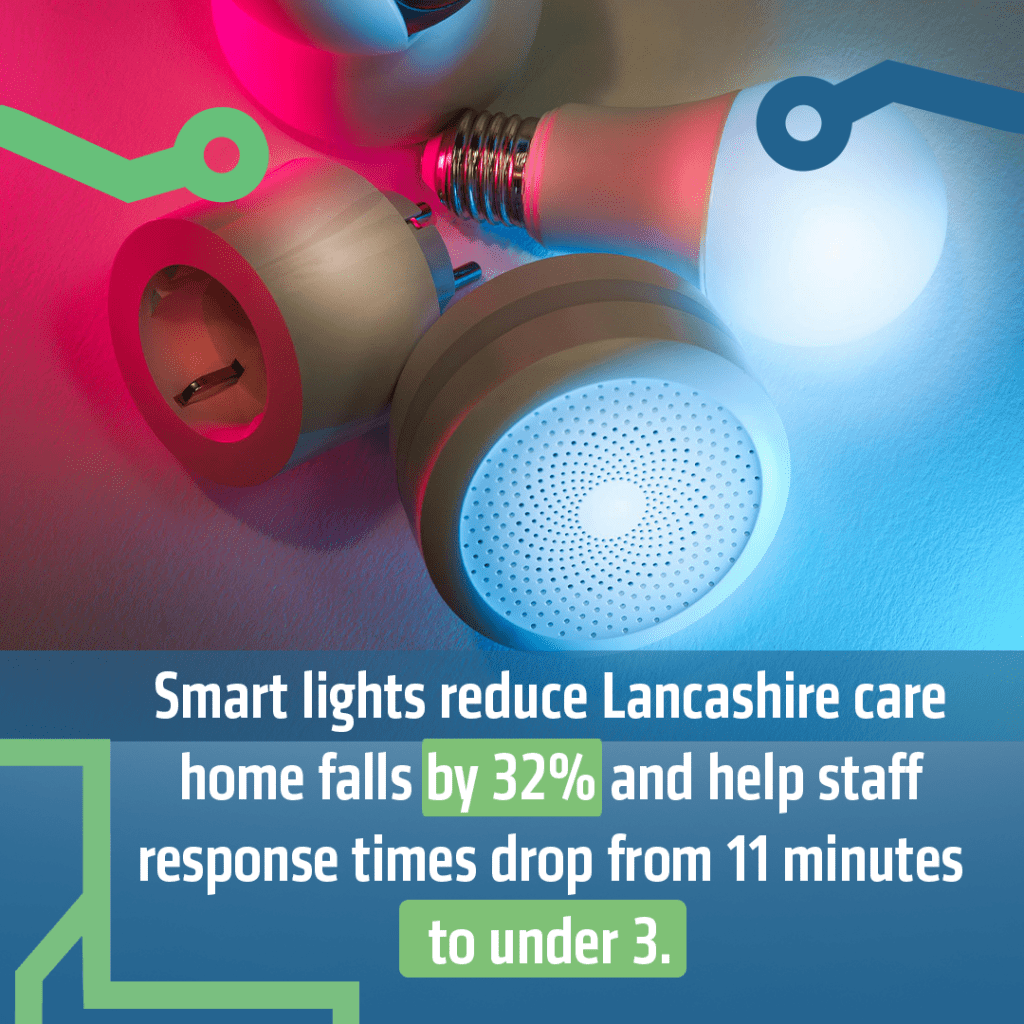
According to the evaluation, the number of falls across participating care homes fell by 32 per cent following the introduction of the Nobi smart lights. Ambulance callouts were reduced by 23 per cent, while ambulance journeys resulting in hospital admissions dropped by 24 per cent.
The Nobi devices were installed in residents’ bedrooms and use AI-driven monitoring technology to observe movement patterns continuously. If a fall is detected, the lamp immediately speaks to the resident to check whether they are safe. If no response is received, or if help is requested, the system alerts care staff and sends an image showing where and how the incident occurred.
Researchers also found a substantial improvement in staff response times. Average response times fell from 11 minutes before implementation to just under three minutes after the technology was introduced.
Professor Carol Holland, Director of the Centre for Ageing Research at Lancaster University, said the scale and independence of the evaluation added weight to the findings.
She said, “This is the largest evaluation of such technology used in a care setting, with the independence from the company and the robust analyses used adding credibility to the very positive findings,”.
“The combination of different types of data examined ensured the voices of the care staff were included in the evaluation, giving us important insights on how the lights worked in a real-world context.”
Pressure On The UK Care Sector Continues To Grow
Across Lancashire and South Cumbria, care homes are supporting more people with advanced dementia and greater levels of frailty than in previous years. Similar trends are being reported nationally, with the UK care sector continuing to adapt to demographic change and rising demand for community-based support.
Digital health and care technology solutions are increasingly being viewed as part of the response to these pressures. While electronic care planning systems and remote monitoring tools have become more common in recent years, AI-enabled environmental technology remains relatively new in social care settings.
Dr Andy Knox, Medical Director at NHS Lancashire and South Cumbria ICB, said falls prevention had become a major strategic priority for the region.
He said, “Falls are one of the biggest reasons for hospital admissions in our region so it was crucial that we explored new forms of technology and how it could be harnessed to predict and prevent falls,”.
“We are extremely pleased with how well the Nobi smart lights have worked, by not only ensuring residents who have fallen are responded to quickly, but by also communicating with care staff in telling them how the fall occurred which in turn has helped prevent future falls.”
Knox added that prevention had become central to reducing pressure on emergency services and improving resident outcomes.
“The information that Nobi has been able to supply to staff has resulted in changes being made to the environment which is why this technology has been so significant in keeping people safe,” he said.
Care Staff Confidence And Adoption Improve
One of the longstanding concerns surrounding digital transformation in social care has been whether staff have the confidence and capacity to adopt new systems effectively.
However, the Lancaster University evaluation found that 80 per cent of care home staff felt confident using the technology, while more than half of care home managers reported that the smart lighting system contributed to improved resident wellbeing.
This finding may be particularly important for technology suppliers seeking wider adoption across the care sector. Concerns about implementation burden, digital skills and workforce resistance have historically slowed the deployment of some care technology initiatives.
The evaluation suggests that when systems are embedded into daily workflows and designed to support rather than replace frontline staff, adoption barriers may be reduced.
Councillor Graham Dalton, Cabinet Member for Adult Social Care at Lancashire County Council, said the technology had provided reassurance for both residents and families.
“These results show how innovative technology like the Nobi smart lamps can make a big difference in keeping residents safe and reducing future falls which should offer reassurance to care home residents and their loved ones,” he said.
“It’s really positive to see care homes embracing technology for the benefit of their residents.”
Financial Savings Could Influence Wider Adoption
Alongside the clinical and operational benefits, the programme also points to potential cost savings for the wider health and care system.
The use of Nobi lights is estimated to generate annual savings of between £16,110 and £33,606 per care home. Across all participating homes, total annual savings are estimated to range from approximately £918,000 to £1.9 million.
For integrated care systems and local authorities under sustained financial pressure, evidence of measurable return on investment is likely to become increasingly important when assessing future digital health and social care innovation projects.
The economic case may also support broader policy discussions around technology-enabled prevention strategies. Falls prevention has long been identified by NHS England and local government bodies as a major area for intervention due to the high costs associated with emergency admissions, long hospital stays and delayed discharges.
Community health technology that can reduce avoidable hospital demand while supporting people in care settings is therefore likely to attract growing attention from commissioners and policymakers.
Roeland Pelgrims, Chief Executive Officer at Nobi, said the evaluation demonstrated the potential for AI-enabled care technology to improve outcomes at scale.
He said, “The results from the evaluation demonstrate how AI-enabled care technology can play a vital role in reducing falls, improving response times, and ultimately enhancing safety and quality of life for residents in care settings,”.

