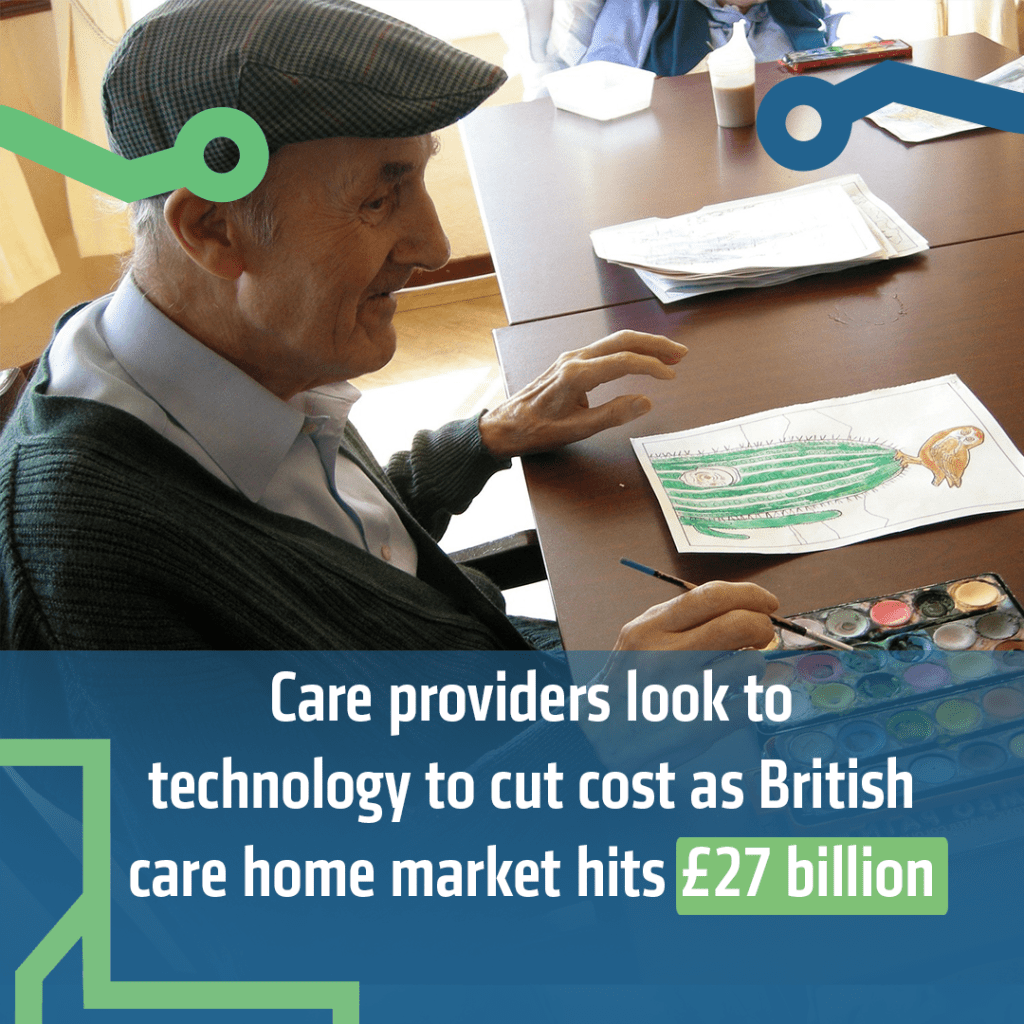
Rising fees rather than rising demand are behind the UK care home sector’s growth to £27bn. With pressure on staffing and funding, providers are increasingly turning to digital tools to keep services sustainable.
Growth Driven By Inflation Not Demand
The UK care home market is now worth an estimated £27 billion, according to LaingBuisson’s latest Care Homes for Older People report. But the headline figure masks a more challenging reality for providers.
Over the past three years, the market has grown by around a quarter, yet only a small share of that increase has come from more people entering care. Most of the growth has been driven by higher fees, reflecting rising wage costs and wider inflation.
For care operators, this means that while revenues may appear stronger on paper, margins remain tight. Staffing costs in particular continue to dominate, shaped by increases in the National Living Wage and employer contributions.
Workforce Challenges Push Digital Adoption
Although vacancy rates have eased since the pandemic, recruitment and retention remain persistent issues across the UK care sector. Providers are under pressure to do more with limited staff, and this is where care technology is gaining traction.
Digital rostering systems, electronic care records and remote monitoring tools are now more common in both care homes and community settings. These systems can reduce time spent on administration and help staff focus more on direct care.
There is also growing interest in predictive tools that can flag changes in a resident’s condition earlier. In practice, this can mean fewer hospital admissions and better coordination with NHS community services.
For local authorities and integrated care systems, digital health platforms are becoming essential to joining up services, particularly as more care is delivered outside hospital environments.
Fee Gap Narrows But Pressures Remain
One notable shift in the market is the narrowing gap between local authority fees and those paid by self-funding residents. This difference has reduced in recent years, suggesting councils are beginning to pay closer to the true cost of care.
Even so, the system still relies on a mix of public and private funding. Self-funded residents continue to account for a large share of the market’s value, supported by housing wealth among older populations.
For providers, the reduced gap may limit their ability to offset rising costs. That, in turn, could make investment decisions, particularly around new technology, more cautious.
Independent Sector Lead Innovate
The vast majority of care home places are delivered by independent providers, and all future growth in capacity is expected to come from this part of the market. Demand is projected to rise steadily over the next decade.
This puts responsibility for innovation largely in the hands of private operators. Many are already investing in social care innovation, from fall-detection sensors to telehealth services.
At the same time, there is a wider shift towards supporting people in their own homes for longer. Home care technology, from remote monitoring devices to digital care planning are becoming an important part of that picture.
Policy Questions Still Unresolved
The sector is also watching closely for the outcome of the Casey Commission, which is expected to shape future reform of adult social care.
LaingBuisson’s William Laing has warned that changes to funding need to be handled carefully. Moving more people into publicly funded care could reduce average fees and put pressure on independent providers.
That uncertainty makes long-term planning more difficult, particularly when it comes to investment in infrastructure and digital systems.
A Shift Towards Tech Based Care
Despite the challenges, the direction of travel is clear. Technology is becoming a central part of how care is organised and delivered across the UK.
From improving day-to-day operations in care homes to supporting people in the community, digital tools are helping providers respond to rising demand and limited resources.
The pace of change may be uneven, but as financial and workforce pressures continue, adoption of care technology is likely to accelerate.
The UK care home market may be growing in value, but the underlying pressures have not gone away. Rising costs, workforce shortages and funding uncertainty continue to shape the sector.
In this context, digital health and community health technology are no longer optional extras. For many providers, they are becoming essential to maintaining quality and keeping services viable.