As the UK healthcare sector moves beyond fragmented trials toward a unified national infrastructure, the focus is shifting from “what” technology can do to “how” it is designed for real-world clinical and social care settings.
Navigating the Great Digital Health Reset
The UK’s health and social care landscape is currently navigating a period of intense recalibration. For years, the sector has been characterised by “pilotitis”, a cycle of small-scale digital projects that demonstrate potential but fail to achieve the systemic integration required for national impact.
As we move through 2026, the luxury of experimentation is being replaced by a “Great Reset.” According to the The Digital Health Horizon 2026 report from Nuom. This shift is driven by a scary reality, health spending is outstripping national income, and the global workforce is facing a projected deficit of 10 million workers by the end of the decade.
For professionals in health tech and social care innovation, the mandate has evolved from proving a concept to ensuring a return on investment and clinical safety at scale.
The Maturation of Virtual Wards and Community Health Technology
The transition of virtual wards from emergency pandemic measures to established national infrastructure shows one of the most significant shifts in UK care delivery. With over 13,000 beds now operational, the challenge has moved from procurement to the “Trust by Design” phase.
Success in this domain relies on a seamless data loop between the home and the clinical hub. For developers and providers of home care technology, this means moving beyond simple hardware to focus on the cognitive load of the end-user.
If a monitoring system is too complex for a patient with frailty or adds administrative friction for a community nurse, it fails the primary test of modern digital health: releasing capacity rather than consuming it.
Establishing Accountable AI and Explainable Governance
Artificial Intelligence is transitioning from a “frontier technology” to a regulated component of the UK care sector. As NHS Trusts and local authorities move toward broader deployment, the rise of formal AI Governance Boards signals a new era of accountability.
These bodies are no longer satisfied with “black box” algorithms; they require “Explainable-by-Design” interfaces. For technology companies working in care, this necessitates a design-led approach where the logic behind an AI-driven alert, such as an increased risk of hospital readmission, is transparent and actionable for the clinician. This shift is essential to overcome the “trust problem” that remains a primary barrier to AI adoption in sensitive social care settings.
Bridging the Data Divide
The historic disconnect between NHS clinical data and local authority social care records has long been a bottleneck for delayed discharges and holistic patient support. The industry is now pivoting toward a Federated Data Architecture.
This model allows critical information to remain secure and localised while being accessible across the care continuum. For innovators in community health technology, this interoperability is the key to unlocking hospital capacity. By ensuring that a home care provider has real-time access to a client’s discharge summary or medication changes, the sector can finally move toward a truly integrated model of “The Home as a Hub” for health management.
Tackling Digital Exclusion as a Clinical Safety Mandate
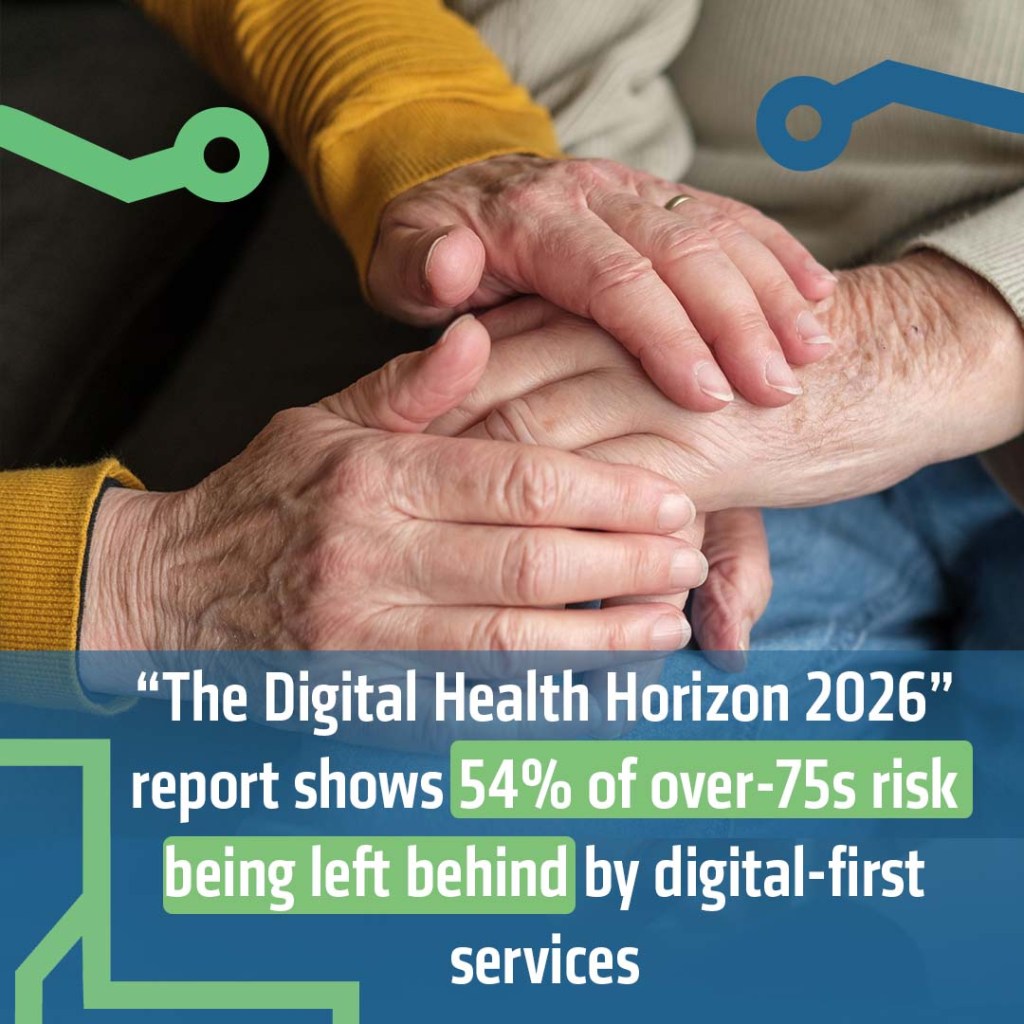
With 54% of individuals over the age of 75 currently digitally excluded, the move toward “digital-first” pathways presents a significant risk to health equity.
The sector is increasingly viewing digital inclusion not as a social initiative but as a fundamental safety requirement. This is driving a trend toward “ambient” social care innovation, passive sensors and voice-activated systems that support independent living without requiring active digital literacy.
By designing for the most vulnerable users first, health tech companies can ensure that their platforms are inclusive by default, preventing the creation of a two-tier care system.
The Future of Value-Based Procurement and Invisible Health
The financial architecture of the UK care sector is shifting from volume-based purchasing to Value-Based Procurement.
In this new landscape, technology suppliers are increasingly held accountable for specific outcomes, such as reduced emergency admissions or improved patient-reported quality of life.
This evolution points toward a future of “Invisible Digital Health,” where technology is so deeply integrated into the fabric of the home and the workflow of the clinician that it becomes unnoticeable.
By focusing on the core principles of trust, interoperability, and intentional sustainability, the sector can finally deliver on the promise of a healthcare system that sustains dignity and health in every community across the UK.