

A new multi-million-pound investment in Welsh medtech company IQ Endoscopes aims to support the early commercial rollout of a single-use gastrointestinal endoscopy platform in the UK. The technology could help healthcare providers tackle rising demand for diagnostic services while reducing operational burdens associated with reusable devices.
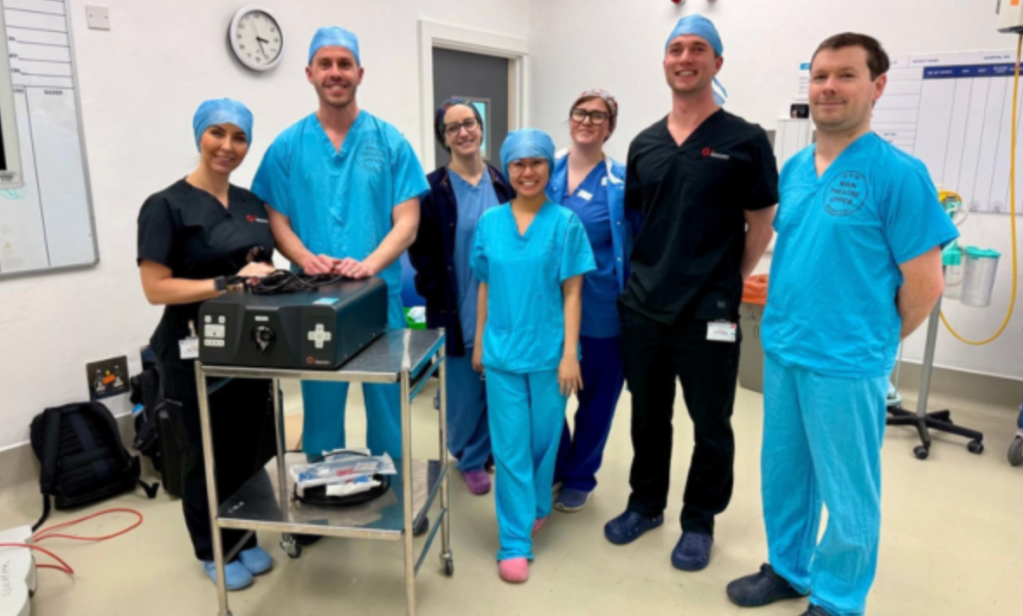
Investment Targets Next Stage of Medical Device Commercialisation
A South Wales medical technology company developing single-use gastrointestinal endoscopes has secured fresh backing from investors to accelerate its early commercial deployment across the UK.
Growth capital investor BGF and the Development Bank of Wales have led a multi-million-pound follow-on investment into IQ Endoscopes, a company founded in 2020 that is developing a disposable endoscopy platform intended to address growing pressures on diagnostic services.
The funding will support the company’s early commercial rollout in selected UK centres, strengthen manufacturing and supply chain capabilities, and build a commercial pipeline as the business prepares for future scale-up both domestically and internationally. The investment will also fund additional regulatory work and market validation in the United States.
The development comes at a time when the UK care sector and NHS community services are under increasing strain from rising demand for diagnostic procedures, including gastrointestinal investigations used to detect conditions such as bowel cancer, inflammatory bowel disease and other digestive disorders.
Rising Demand for Endoscopy Services in the UK
Demand for endoscopy services has increased significantly in recent years. An ageing population, expanded cancer screening programmes and greater awareness of gastrointestinal conditions are placing additional pressure on diagnostic pathways across the NHS.
Endoscopy procedures play a crucial role in diagnosing diseases early, particularly cancers of the digestive system. However, hospitals often face bottlenecks due to equipment availability, infection control processes and workforce capacity.
Reusable endoscopes require extensive cleaning and sterilisation between procedures, known as decontamination. This process can take significant time and involves specialised facilities, trained staff and transport logistics if centralised sterilisation units are used.
As a result, hospitals sometimes struggle to maximise procedure capacity, particularly during periods of high demand or workforce shortages.
IQ Endoscopes is attempting to address this challenge with a single-use device designed to remove the need for complex decontamination processes.
Single-Use Endoscopes Aim to Improve Efficiency
The company’s gastrointestinal endoscopy platform is designed to be disposable after a single procedure, removing the need for reprocessing and potentially reducing delays between patients.
According to the company, the approach could simplify workflows, reduce operational costs associated with cleaning and transport, and free up clinical staff time.
Matt Ginn, chief executive of IQ Endoscopes, said the latest funding would allow the company to move its technology into early real-world use within the healthcare system.
“This investment is a significant step forward for IQ Endoscopes as we move into the next phase of our growth,” he said.
“It allows us to begin early commercial rollout in the UK, strengthen our operational foundations and build momentum for future expansion.”
Ginn added that the company’s investors had played an important role in helping the business reach the point where it could introduce its technology into clinical settings.
“Support from BGF and the Development Bank of Wales has been instrumental in helping us reach this point, and we’re excited to continue to work closely alongside them as we bring our technology into real-world clinical use.”
Investors Back Technology Addressing Healthcare System Pressures
Investors say the company is tackling a well-defined problem facing healthcare systems globally.
Maggy Lau, an investor at BGF, said demand for more efficient diagnostic technologies continues to grow as health services face rising demand.
“IQ Endoscopes is addressing a clear challenge facing healthcare systems, with a product that has the potential to make a lasting, positive impact,” she said.
“We’re pleased to continue to support Matt and the team as the business moves into this exciting next stage of growth.”
The Development Bank of Wales, which has also invested in the company, highlighted the potential for the technology to support both healthcare access and economic growth.
Tom Davies, investment executive at the Development Bank of Wales, said the company had made significant progress since its launch.
“We’re proud to continue supporting IQ Endoscopes as it enters its next growth phase,” he said.
“The team’s progress in manufacturing and early clinical use is impressive, and this investment will help accelerate adoption of a technology that could enhance patient access and strengthen endoscopy services across the NHS and beyond.”
Implications for Care Delivery and the Wider UK Care Sector
While endoscopy services are typically delivered within hospitals, improvements in diagnostic efficiency can have wider implications for the UK care sector.
Faster diagnosis of gastrointestinal conditions can lead to earlier treatment, potentially reducing the need for more complex care later in the patient pathway. Early detection is particularly important for conditions such as bowel cancer, where outcomes improve significantly when diagnosed early.
For community health services and home care providers, quicker diagnosis can help ensure patients receive appropriate care plans sooner, supporting integrated care models that aim to keep people well at home where possible.
Technology innovations that improve diagnostic access may also align with broader health policy goals around prevention, early intervention and reducing pressure on acute services.
Although IQ Endoscopes is focused on hospital-based procedures, its platform sits within the wider ecosystem of care technology and digital health innovation reshaping healthcare delivery.
Future Outlook for Diagnostic Technology
The next phase for IQ Endoscopes will involve demonstrating the real-world clinical and operational benefits of its platform as it rolls out across selected UK centres.
If successful, the technology could contribute to new approaches in diagnostic service delivery, particularly in environments where equipment availability and decontamination infrastructure limit throughput.
Further regulatory work and market validation in the United States also indicate the company is targeting international expansion.
For the UK innovation ecosystem, the investment reflects continued interest in healthcare technologies developed outside traditional life sciences hubs.
As the healthcare system continues to explore ways to increase capacity and improve patient outcomes, technologies that simplify workflows and improve efficiency are likely to attract ongoing attention from providers and policymakers alike.

